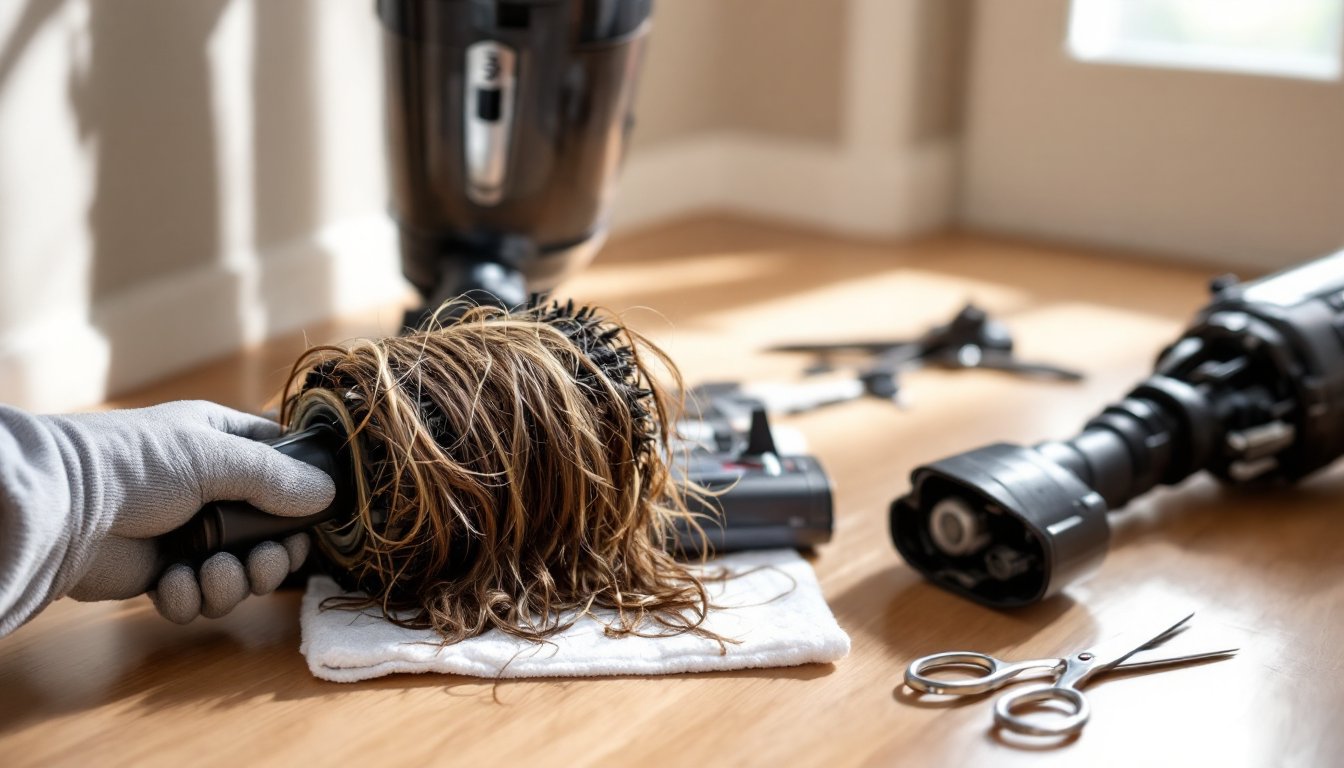
When the roller brush on a Shark vacuum suddenly stops spinning, it often feels like the whole machine is useless. That telltale hum without any actual cleaning action is frustrating, especially mid-project. But most brush roll failures aren’t terminal, they’re caused by clogs, worn belts, or simple mechanical lockups that any homeowner can diagnose and fix. This guide walks through the most common reasons a Shark vacuum brush roll quits working and provides practical, step-by-step solutions to get it spinning again without a service call.
Table of Contents
ToggleKey Takeaways
- Hair and fiber buildup is the leading cause of Shark vacuum roller brush failure, but it’s fixable by cutting away wrapped hair and cleaning the bearings thoroughly.
- A worn or broken belt is the second most common issue—inspect for cracks or stretching, and replace with a new belt for $5–$10 to restore proper roller function.
- Before disassembling anything, check the brush roll on/off switch, inspect for visible clogs, and manually spin the roller to identify quick fixes that take under five minutes.
- If cleaning and belt replacement don’t work, consider full roller replacement ($15–$30) rather than attempting electrical motor repairs, which are less common and less cost-effective to fix.
- Regular maintenance every few months—clearing hair buildup and swapping the belt annually—prevents most Shark vacuum brush roll problems from developing in the first place.
Why Your Shark Vacuum Brush Roll Stopped Spinning
Before diving into fixes, it’s helpful to understand what stops a brush roll in the first place. Shark vacuums use a belt-driven roller brush that spins at high RPM to agitate carpet fibers and lift debris. When something interrupts that system, the motor keeps running but the brush doesn’t.
Hair and fiber buildup is the leading culprit. Long hair, pet fur, and carpet fibers wrap tightly around the brush roll and bearings, creating enough friction to stop rotation completely. Even a few strands can bind the roller if they work their way into the end caps.
Worn or broken belts are the second most common issue. Shark vacuum belts are typically made of reinforced rubber and designed to slip slightly under load, but they stretch, crack, or snap after months of use. A snapped belt is obvious: a stretched one may look intact but won’t grip the brush roll pulley properly.
Mechanical obstructions like coins, twist ties, or chunks of debris can jam the brush roll housing. Some Shark models have a safety cutoff that disengages the roller if it detects a blockage, which can make the problem seem electrical when it’s purely mechanical.
Less common but still possible: a failed motor, a tripped internal breaker, or a switch malfunction. These typically require more involved troubleshooting and, in some cases, professional repair.
Quick Fixes You Can Try Right Now
Before disassembling anything, try these fast checks. They solve a surprising number of brush roll problems in under five minutes.
1. Turn off and unplug the vacuum. This should be automatic for any maintenance, but it’s critical when working around moving parts and electrical components.
2. Check the brush roll on/off switch. Many Shark uprights have a floor setting toggle that disables the brush roll for hard floors. It’s easy to bump accidentally. Make sure it’s set to carpet or brush-on mode.
3. Inspect the nozzle opening for visible clogs. Flip the vacuum over and look at the brush roll through the bottom plate. Sometimes a sock, plastic bag, or chunk of cardboard wedges into the housing and stops everything cold. Remove any obvious debris.
4. Spin the brush roll by hand. With the vacuum still unplugged, try rotating the roller manually. It should turn freely with slight resistance. If it’s locked solid, something is binding it. If it spins with zero resistance, the belt is likely broken or off the pulley.
5. Check for a reset button. Some Shark models have a thermal overload reset on the motor housing or near the power switch. If the motor overheated, pressing this button may restore function. Consult the user manual for location, it varies by model.
If none of these quick checks solve the problem, it’s time to open the brush roll compartment and dig deeper.
How to Deep Clean a Clogged Roller Brush
Hair and fiber buildup is the most fixable issue, but it requires some hands-on work. Wear work gloves, the brush roll bristles can be sharp, and old debris is rarely clean.
Step 1: Remove the brush roll cover. Most Shark vacuums have a bottom plate held by two to four screws or release latches. Some models use a combination: screws on the sides and clips at the front. Keep track of hardware.
Step 2: Lift out the brush roll. It typically slides out once the cover is off. Note the orientation, there’s usually a belt side and a bearing side.
Step 3: Cut away wrapped hair and fibers. Use scissors or a seam ripper to slice along the length of the roller, then peel away the matted mess. Don’t yank, tightly wound hair can damage the bristles or bend the roller shaft. For stubborn tangles around the end caps, needle-nose pliers help.
Step 4: Clean the end bearings and housing. Hair often migrates into the bearing recesses where the roller spins. Wipe these areas with a damp cloth, and use a flathead screwdriver or pick to clear packed debris. These guides from This Old House often emphasize how critical clean bearings are for smooth operation.
Step 5: Inspect the brush roll for damage. Check for worn-down bristles, a bent shaft, or cracked plastic. If the bristles are less than half their original height or the roller wobbles, replacement is a better option than reassembly.
Step 6: Reinstall the roller and test. Slide it back into the housing, making sure it seats properly in both end brackets. Replace the cover and test the vacuum on a scrap of carpet. The brush should spin freely without grinding noises.
Replacing a Worn or Damaged Brush Roll
If cleaning doesn’t restore function, or the roller is visibly worn, replacement is straightforward. Shark sells OEM brush rolls for most models, usually in the $15–$30 range depending on the series. Generic replacements are cheaper but may not fit as precisely.
Step 1: Identify the correct part number. Check the user manual, the label inside the vacuum’s dirt cup, or Shark’s website. Brush rolls are model-specific: a Navigator roller won’t fit a Rotator, even if they look similar.
Step 2: Remove the old roller as described in the previous section.
Step 3: Install the new roller. Align the belt over the motor pulley first (see next section if the belt is also worn), then slide the roller into the end brackets. The belt should sit in the groove on the roller without twisting.
Step 4: Secure the cover and test. A new roller should spin smoothly and quietly. If it squeaks or grinds, double-check the end cap alignment.
Replacement rollers are a consumable part, especially in homes with pets. Expect to swap them every 12–24 months under heavy use. Some users note in reviews from Good Housekeeping that proactive replacement before the bristles wear completely flat extends vacuum performance noticeably.
Fixing Belt Issues That Stop the Roller
A broken or slipping belt is the second most common fix. Shark vacuum belts are inexpensive, usually $5–$10 for a two-pack, but they’re also easy to install incorrectly if you rush.
Step 1: Access the belt. Remove the brush roll as outlined earlier. The belt loops around a motor drive pulley and the brush roll itself.
Step 2: Inspect the old belt. Look for cracks, glazing (a shiny, hardened surface), stretching, or a complete break. Even if the belt looks intact, a stretched belt that’s lost tension won’t drive the roller effectively.
Step 3: Remove the old belt and clean the pulleys. Wipe both the motor pulley and the brush roll groove with a damp cloth to remove dust and residue. A clean surface ensures better grip.
Step 4: Install the new belt. Loop it over the motor pulley first, then stretch it over the brush roll. The belt should sit centered in the roller’s groove, not riding up on one edge. This takes a bit of force, don’t be shy, but avoid overstretching to the point where the belt could snap.
Step 5: Rotate the brush roll by hand several times to seat the belt. It should track smoothly without hopping or slipping off.
Step 6: Reassemble and test. If the belt is correctly installed, the roller will spin at full speed as soon as the vacuum powers on. If it slips or squeals, recheck the tension and alignment.
Belts wear faster on high-pile carpet and in homes with shedding pets. Some Today’s Homeowner maintenance checklists recommend keeping a spare belt on hand as cheap insurance against downtime.
When to Reset or Replace the Motor
If the brush roll, belt, and housing are all clean and intact but the roller still won’t spin, the issue may be electrical or motor-related.
Check the thermal cutoff. Many Shark vacuums have an overload protector that trips if the motor overheats or draws too much current. This is usually a small red or black reset button located near the motor housing or on the side of the power head. Press it firmly, it should click. If it trips repeatedly, the motor may be failing or there’s an internal short.
Test the motor separately. On some models, the brush roll motor is modular and can be tested independently. Consult the service manual or a model-specific teardown video. If the motor hums but doesn’t turn, it’s likely seized. If it’s silent, the motor may be dead or a wiring connection has failed.
When to call it. Replacing a Shark vacuum motor is possible but rarely cost-effective. Motors run $40–$80 for the part alone, and installation requires partial disassembly of the power head, including removing the motor mount, disconnecting wiring, and often dealing with thread-locking screws. For older vacuums or budget models, replacement makes more sense than a motor swap.
Safety note: Working on vacuum motors involves live electrical components. Always unplug the vacuum and discharge any capacitors if present. If uncomfortable with electrical troubleshooting, this is the time to consult a repair shop or consider an upgrade.
Motor failures are less common than mechanical issues, but they do happen after years of use or if the vacuum has been run with a clogged filter, which starves the motor of cooling air.
Conclusion
Most Shark vacuum brush roll problems come down to hair buildup, a worn belt, or a simple mechanical jam, all fixable with basic tools and an hour of work. Regular maintenance, like clearing the roller every few months and swapping the belt annually, prevents most failures before they happen. If the motor itself is the issue, weigh repair cost against replacement, but don’t write off the vacuum until the simpler fixes have been tried.