A bedroom with the right lighting doesn’t just look better, it feels different the moment someone walks in. Luxury bedroom lighting isn’t about slapping up an expensive fixture and calling it done. It’s about creating layers, choosing fixtures that match the room’s architecture, and understanding how light affects mood, function, and perceived space. Whether someone’s upgrading a builder-grade bedroom or refining a high-end renovation, the fixtures and placement make all the difference. This guide walks through the essential types, layering strategies, and style-specific choices that turn ordinary bedrooms into spaces worth lingering in.
Table of Contents
ToggleKey Takeaways
- Luxury bedroom lighting creates multiple layers—ambient, task, and accent—rather than relying on a single overhead fixture, transforming a flat space into one with dimension and mood.
- Layered lighting improves both functionality and perceived value: homes with thoughtful luxury bedroom lighting design appraise higher, sell faster, and provide better smart home integration for reading, dressing, and relaxation.
- Proper fixture placement and dimensions matter: chandeliers should hang 30–36 inches above the mattress, bedside sconces at 60–68 inches from the floor, and fixture diameter should match the room’s proportions using the length-plus-width formula.
- Luxury bedroom lighting fixtures in materials like hand-blown glass, solid brass, and genuine crystal age gracefully and hold up to daily use, unlike cheaper finishes that chip or tarnish within years.
- Choose fixtures that align with your bedroom’s architectural style—whether mid-century modern, traditional, industrial, or coastal—and maintain finish consistency (limit to two complementary metals) to avoid visual clutter.
- Invest in quality brands and prioritize warm color temperatures between 2700K–3000K to promote relaxation and support healthy circadian rhythms, avoiding cooler clinical tones that disrupt sleep.
Why Luxury Lighting Makes All the Difference in Your Bedroom
Lighting controls how a room reads. A bedroom lit by a single overhead fixture feels flat and uninviting, no matter how expensive the furniture. Luxury lighting solves that by adding dimension, shadows, highlights, and focal points that guide the eye and set the tone.
High-end fixtures also signal craftsmanship. A hand-blown glass pendant or a brass sconce with patina tells a different story than mass-market options. Materials matter: solid brass, hand-forged iron, and genuine crystal age gracefully and hold up to daily use. Cheaper finishes chip, tarnish, or corrode within a few years.
From a practical standpoint, luxury fixtures often include better dimming compatibility and more refined beam angles. Many work seamlessly with modern smart home systems like Lutron or Control4, allowing users to program scenes for reading, dressing, or winding down. That level of control isn’t just convenience, it’s essential for a space designed around rest and function.
Finally, the right lighting increases perceived value. Homes with thoughtful, high-end design elements consistently appraise higher and sell faster. Buyers notice lighting immediately, and it’s one of the easiest upgrades to justify during a renovation.
Essential Types of Luxury Bedroom Lighting
Statement Chandeliers and Pendant Lights
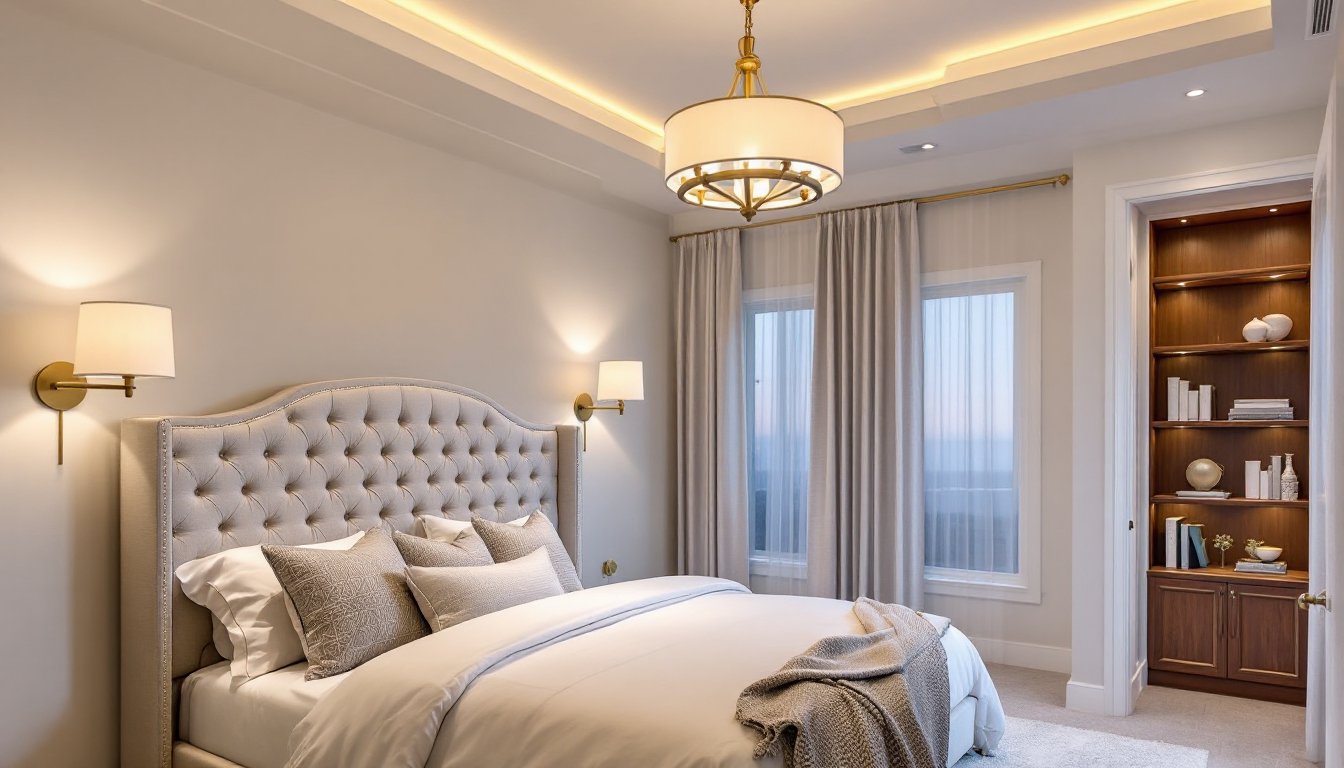
A chandelier or pendant over the bed serves as the room’s visual anchor. In bedrooms with 8- to 10-foot ceilings, a fixture should hang roughly 30 to 36 inches above the mattress to avoid head clearance issues while maintaining presence. For vaulted or tray ceilings, adjustable-height pendants or multi-arm chandeliers work best.
Materials define the mood. Sputnik-style fixtures in brushed brass or blackened steel fit mid-century modern and industrial aesthetics. Crystal chandeliers with faceted drops suit traditional or glam interiors. For coastal or Scandinavian styles, consider linen drum pendants or rattan globe fixtures that soften light and add texture.
Installation requires a ceiling junction box rated for the fixture’s weight. Most decorative chandeliers weigh 15 to 40 pounds: anything heavier needs additional bracing between joists. If the existing box isn’t rated, it’s worth hiring an electrician to install a fan-rated or heavy-duty box. Skipping this step risks the fixture pulling loose or damaging drywall.
Wiring for a dimmer switch is non-negotiable. Use a compatible LED dimmer if the fixture includes integrated LEDs or LED bulbs, standard incandescent dimmers cause flickering and reduce bulb lifespan. Many luxury bedroom designs feature dimmable chandeliers paired with layered task lighting for full control.
Elegant Bedside Table Lamps and Sconces
Bedside lighting needs to be functional first, decorative second. Table lamps should sit 24 to 27 inches tall from the base to the bottom of the shade, positioning the light source roughly at shoulder height when someone’s sitting up in bed. This minimizes glare and provides even light for reading.
Hardwired sconces are the cleaner option, no cords, no outlet crowding. Mount them 60 to 68 inches from the floor (center of the fixture), and position them 18 to 24 inches out from the edge of the bed. Swing-arm sconces with adjustable heads offer flexibility for reading angles without taking up nightstand space.
If hardwiring isn’t feasible, plug-in sconces with fabric-wrapped cords or cord covers maintain a polished look. Avoid cheap plastic cord clips: use paintable raceways or adhesive-backed channels that blend with the wall color.
For shade selection, linen or cotton drum shades diffuse light evenly, while metal or glass shades create directional task lighting. Match the shade’s diameter to the lamp base, typically 60 to 70% of the base width, to keep proportions balanced. Luxury fixtures often include three-way switches or integrated dimmers, giving users low, medium, and high settings without installing additional controls.
Ambient and Accent Lighting Solutions
Ambient lighting fills the room without harsh shadows. Recessed cans work well in modern or minimalist bedrooms, but they need proper spacing, typically 4 to 6 feet apart and 24 to 30 inches from walls to avoid scalloping. Use adjustable trims to direct light toward walls or ceilings for a softer wash.
Cove lighting hidden in tray ceilings or behind crown molding adds architectural drama. LED strip lights (look for high-CRI options above 90) provide even, color-accurate illumination. Secure strips with aluminum channels for a cleaner finish and better heat dissipation. Most luxury home projects incorporate dimmable LED strips controlled via smart switches or apps.
Accent lighting highlights artwork, textured walls, or built-in shelving. Picture lights or adjustable track heads with narrow beam spreads (around 15 to 25 degrees) focus attention without spilling into the rest of the room. For wardrobes or walk-in closets adjoining the bedroom, motion-activated LED puck lights or linear bars improve functionality and add a high-end feel.
Don’t overlook color temperature. Bedrooms benefit from 2700K to 3000K bulbs, warm tones that promote relaxation. Cooler temperatures (3500K and up) feel clinical and disrupt circadian rhythms. Test bulbs in the actual space before committing: paint color and natural light affect how artificial light reads.
How to Layer Your Bedroom Lighting Like a Designer
Layering starts with identifying three lighting functions: ambient (general illumination), task (specific activities like reading or dressing), and accent (highlighting features or creating mood). Each layer uses different fixtures and serves a distinct purpose, but they all need to work together.
Start with ambient lighting as the foundation. This might be a central chandelier, recessed cans, or cove lighting, whatever provides broad, even coverage. The goal is 30 to 50 footcandles of light for general tasks like tidying or getting dressed. Dimming capability lets users dial this layer down in the evening.
Next, add task lighting at functional zones. Bedside sconces or lamps handle reading: a well-lit vanity or dressing area needs vertical lighting (sconces flanking a mirror) to eliminate shadows on the face. Many upscale bedroom layouts place task lights on separate switches or dimmers so each zone operates independently.
Accent lighting completes the layer. This could be uplighting on a feature wall, a strip behind a floating headboard, or picture lights over artwork. Accent lights should be two to three times dimmer than ambient lighting to create contrast without overwhelming the space. Run them on a dedicated circuit or smart plug for easy control.
Avoid common mistakes: overlapping light sources without dimmers creates harsh, unflattering conditions. Fixtures with mismatched color temperatures (one warm, one cool) feel disjointed. And skipping accent lighting leaves a room feeling one-dimensional, no matter how expensive the main fixtures are.
Consider zoning circuits during renovation or new construction. This allows different lighting layers to be controlled separately, essential for luxury bedrooms where mood and function shift throughout the day. Consult an electrician about adding smart switches or a centralized lighting control system if the project involves rewiring or panel upgrades. Permits may be required for electrical work depending on jurisdiction, so check with the local building department before starting.
Choosing the Right Fixtures for Your Luxury Bedroom Style
Fixture selection should align with the room’s architectural style and material palette. A mid-century modern bedroom calls for geometric pendants, tapered drum shades, and finishes like aged brass or matte black. Traditional or transitional spaces lean on crystal chandeliers, porcelain lamps, and oil-rubbed bronze or polished nickel sconces.
For contemporary or minimalist bedrooms, less is more. Look for fixtures with clean lines, integrated LEDs, and minimal hardware. Linear pendants, cylinder sconces, and flush-mount fixtures with frosted glass diffusers maintain an uncluttered aesthetic. Avoid overly ornate details that compete with the room’s simplicity.
Industrial and farmhouse styles embrace raw materials: exposed filament bulbs, wrought iron frames, and reclaimed wood accents. Pendant lights with cage shades or Edison bulbs add character without feeling fussy. Just ensure the fixtures are UL-listed and installed per manufacturer specs, decorative doesn’t mean shoddy construction.
Glam or Hollywood Regency bedrooms go bold with crystal chandeliers, polished chrome finishes, and dramatic scale. Fixtures in these styles often feature faceted glass, mirrored surfaces, or lucite bases. Pair them with dimmers to tone down intensity when needed, and balance large fixtures with simpler bedside lighting to avoid visual clutter.
For coastal or organic-modern aesthetics, natural materials shine. Rattan pendants, linen shades, stone bases, and driftwood accents bring warmth and texture. Fixtures inspired by luxury design trends often combine mixed materials, like a brass frame with a fabric shade, to add depth.
Finish consistency matters. If bedside sconces are brushed brass, the chandelier and any accent fixtures should match or complement that finish. Mixing metals is acceptable, brass and black or nickel and bronze, but limit it to two finishes per room to maintain cohesion.
Size and proportion are critical. A chandelier that’s too small looks like an afterthought: one that’s too large overwhelms. A general rule: add the room’s length and width in feet, then convert that sum to inches for the fixture’s diameter. For example, a 12-foot by 14-foot bedroom suggests a chandelier around 26 inches wide. Adjust based on ceiling height and furniture scale.
Finally, prioritize quality over trendiness. Fast-fashion lighting fades, chips, and breaks. Invest in fixtures from manufacturers known for durability and design, brands like Visual Comfort, Hudson Valley Lighting, or Circa Lighting (if budget allows). Even mid-range options from Rejuvenation or Schoolhouse Electric outlast big-box alternatives and hold up through multiple style refreshes. High-end properties consistently feature well-made fixtures that age into the design rather than out of it.