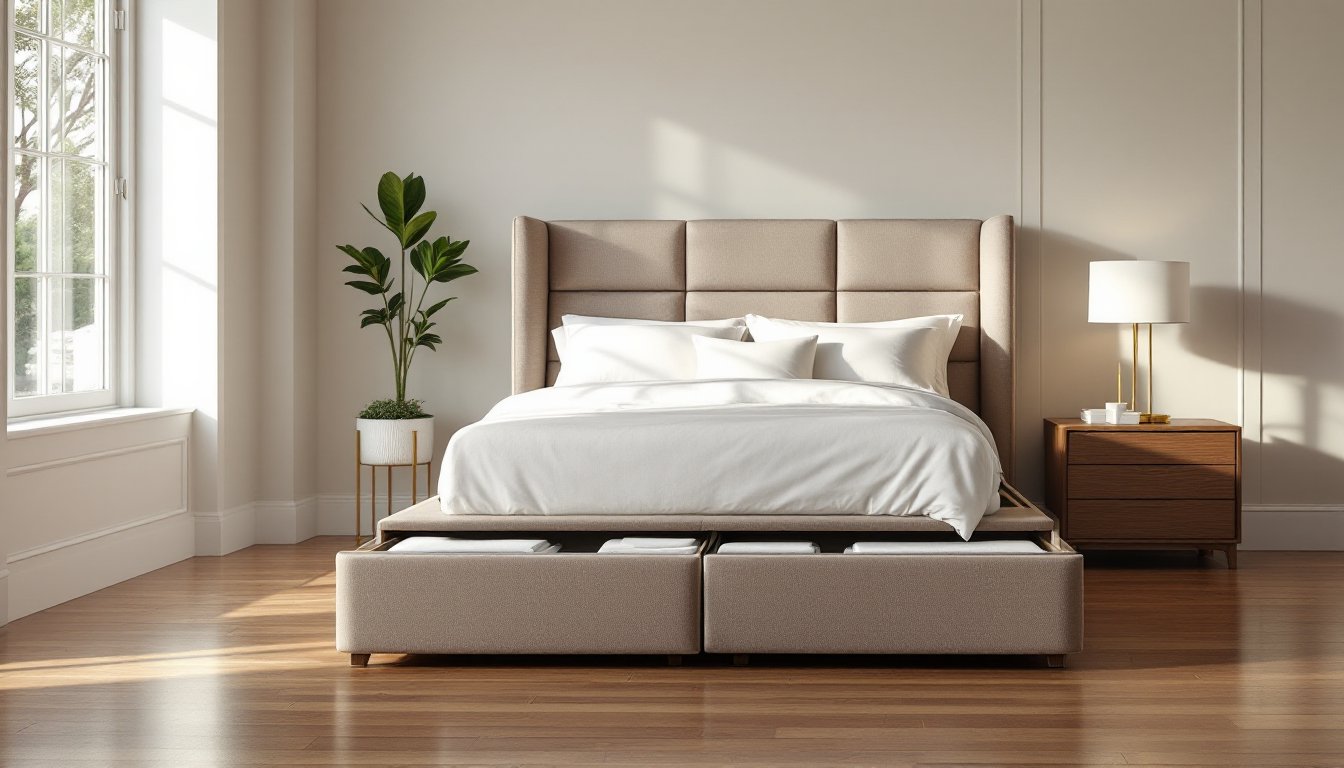
A storage bed isn’t just furniture, it’s a space-saving workhorse disguised as a centerpiece. When that bed is a luxury model, you’re getting premium materials, thoughtful engineering, and a design that doesn’t scream “dorm room.” Luxury storage beds combine high-end aesthetics with practical functionality, turning dead space under a mattress into organized, accessible storage. Whether you’re dealing with a small bedroom, a lack of closet space, or simply too much stuff, the right storage bed can solve multiple problems without looking like a compromise. Here’s what separates a luxury storage bed from a basic frame, and how to choose one that fits your space and style.
Table of Contents
ToggleKey Takeaways
- A luxury storage bed combines premium materials, superior construction quality, and intentional design to transform under-bed space into organized storage without sacrificing aesthetics.
- Hydraulic lift beds maximize storage capacity (20–30 cubic feet) for bulky, seasonal items but require ceiling clearance and effort to access, while drawer beds offer easier access to frequently used items but with reduced capacity.
- Quality luxury storage beds use solid hardwoods, high-grade upholstery rated 50,000+ double rubs, and ball-bearing or soft-close hardware mechanisms rather than budget materials like particleboard and plastic.
- Measure your bedroom layout carefully—drawer beds need 18–20 inches of side clearance, and platform heights of 14–18 inches may feel cramped in rooms with standard 8-foot ceilings.
- Organize hydraulic lift beds using clear plastic bins and weight distribution near hinges, while drawer beds benefit from frequency-based organization with dividers to maximize usability and prevent moisture buildup.
- Your mattress type and storage needs determine the best choice: lighter memory foam pairs well with hydraulic beds, while heavier innerspring mattresses are better suited to drawer storage options.
What Makes a Storage Bed ‘Luxury’?
A luxury storage bed isn’t defined by price alone, it’s the combination of materials, construction quality, and design execution that sets it apart.
First, materials matter. Luxury frames use solid hardwoods (maple, oak, walnut) or high-grade engineered wood with real wood veneer, not particleboard wrapped in vinyl. Upholstered models feature genuine leather or commercial-grade fabrics rated for 50,000+ double rubs. Metal components, hinges, lift pistons, drawer slides, are typically ball-bearing or soft-close mechanisms, not plastic tracks that jam after six months.
Construction quality shows in the joinery. Look for mortise-and-tenon or dowel joints reinforced with corner blocks, not just staples or cam locks. Drawer boxes should be dovetailed or English-jointed, with solid wood bottoms (not thin plywood or MDF). Hydraulic lift beds use gas pistons rated for 10,000+ cycles, often with safety-hold features to prevent slamming.
Design execution is where luxury really separates from budget. These beds integrate storage seamlessly, no exposed hardware, no visible lift mechanisms when closed, and proportions that look intentional rather than bulky. Upholstered models often feature channel tufting, welt cord detailing, or Belgian linen, while wood frames showcase book-matched veneers or hand-applied finishes. The storage itself is designed for usability: compartments sized for actual bedding or seasonal clothing, not just empty cavities.
Types of Luxury Storage Beds for Your Bedroom
Two main types dominate the luxury market, each with distinct advantages.
Hydraulic Lift Storage Beds
Hydraulic (or gas-lift) beds hinge at the head or foot, lifting the entire mattress platform to reveal a large, open storage cavity underneath. This design maximizes usable volume, you’re looking at roughly 20–30 cubic feet of space, depending on bed size.
The lift mechanism uses gas pistons (similar to a car hatchback) to counterbalance the weight of the mattress and platform. Quality systems require minimal effort to raise: you should be able to lift a king-size bed with one hand. Look for pistons with adjustable tension if you plan to switch mattress types later.
Pros: Maximum storage capacity: ideal for bulky items like comforters, off-season clothing, or luggage. No floor space taken by drawers. Clean aesthetic with no protruding hardware.
Cons: Access requires lifting the mattress (remove nightstand items first). Heavier mattresses or thick pillow-tops can strain cheaper pistons. Installation typically requires two people due to weight and assembly complexity.
These beds work well in smaller bedrooms where drawer clearance is tight, or when you need to store items you don’t access daily. Designers at Design Milk often feature hydraulic beds in modern interiors where minimalism is key.
Drawer Storage Beds
Drawer beds integrate pull-out drawers into the base, typically two to six drawers depending on bed size and frame depth. Luxury models use full-extension ball-bearing slides that support 75–100 lbs per drawer and glide smoothly even when fully loaded.
Drawer configuration varies: side drawers (most common), foot drawers, or a combination. Side drawers require 16–20 inches of clearance on each side, so measure your room layout carefully. Some models feature independent drawer units that can be positioned as needed, while others have built-in drawers as part of the frame structure.
Pros: Easy access without disturbing the mattress or bedding. Good for frequently used items like extra linens, clothing, or personal items. Drawers can be organized with dividers or bins. Often easier to assemble than lift beds.
Cons: Reduced capacity compared to lift beds, drawers waste space with internal dividers and slide mechanisms. Requires floor clearance around the bed. Drawers can catch on rugs or uneven floors.
Drawer beds suit spaces with ample floor clearance and users who need frequent access to stored items. They’re also easier for homes with mobility considerations, no lifting required.
Choosing the Right Luxury Storage Bed for Your Space
Start with room dimensions and traffic flow. Measure your bedroom with furniture in place, not just wall-to-wall. For drawer beds, add 18–20 inches on each side where drawers will open. For hydraulic beds, ensure the mattress can lift fully, some canopy ceilings or low-hanging light fixtures create clearance issues when the bed is raised.
Ceiling height matters for platform beds with storage. Luxury models often sit 14–18 inches high (deck height, not including mattress), compared to 7–10 inches for standard frames. Add your mattress thickness, and you could be sleeping 24+ inches off the floor. That can feel awkward in rooms with 8-foot ceilings, or create difficulty for shorter individuals or those with mobility issues.
Consider what you’re storing. Hydraulic beds excel at bulky, seasonal items, think winter comforters, luggage, or archival boxes. Drawer beds work better for frequently accessed items like linens, clothing, or personal items you want organized and visible. If you’re storing both, a hybrid design with hydraulic lift and drawers offers flexibility (though it’s pricier and requires more clearance).
Mattress type influences your choice. Memory foam or hybrid mattresses (lighter) pair well with hydraulic beds. Heavy innerspring mattresses or pillow-tops strain gas pistons, upgrade to heavy-duty pistons rated for your mattress weight, or opt for drawer storage instead.
Finally, assembly and access. Most luxury storage beds arrive in multiple boxes and require 2–3 hours of assembly with two people. Hydraulic beds are heavier and more complex due to piston installation. If you move frequently or live in a walk-up, consider models with modular construction or tool-free assembly. Some manufacturers offer white-glove delivery with in-home setup, worth it if you’re not confident in your assembly skills or don’t have help.
Top Materials and Finishes for Luxury Storage Beds
Wood frames remain the gold standard for durability and timeless appeal. Solid hardwoods like oak, walnut, and maple offer strength and attractive grain patterns. Expect 3/4-inch to 1-inch solid wood for primary frame components (headboard, footboard, side rails), with plywood or solid wood slats for the deck.
Veneer over engineered wood is acceptable in luxury beds if it’s done right, look for real wood veneer (not printed laminate) over high-grade plywood or MDF. Quality veneers are book-matched for symmetry and finished with multiple coats of polyurethane or lacquer for protection. Avoid beds with printed or paper-thin veneers that chip or peel.
Upholstered frames add softness and contemporary style. Luxury upholstery uses 100% polyester commercial-grade fabrics (rated 50,000+ double rubs), linen blends, or top-grain leather. Cheaper beds use bonded leather or thin synthetic fabrics that crack or pill within a year. Check if the upholstery is removable or cleanable, some frames feature zippered panels, while others are permanently upholstered.
Padding quality matters too. Luxury upholstered beds use high-density foam (1.8–2.5 lbs/cubic foot) over solid frames, not just batting over particleboard. The padding should feel firm and supportive, not squishy or hollow.
Metal accents, legs, drawer pulls, corner guards, should be solid brass, stainless steel, or powder-coated steel, not plated plastic. Weight is a tell: quality hardware feels substantial.
Finishes vary by style. For wood, hand-rubbed oil finishes showcase natural grain but require occasional maintenance. Catalyzed lacquer or conversion varnish offers durability with a smooth, protective surface. For upholstered beds, neutral tones (linen, charcoal, taupe) stay timeless, while bolder colors (navy, emerald, blush) make a statement but may date quickly. When planning your bedroom aesthetic, consider how the bed coordinates with broader luxury homes ideas you’re implementing throughout your space.
Organizing Your Luxury Storage Bed Like a Pro
Luxury storage beds offer premium capacity, but poor organization turns them into black holes. Here’s how to maximize usability.
For hydraulic lift beds, treat the cavity like a large trunk. Use clear plastic storage bins (not cardboard, which traps moisture) to group items, one bin for winter bedding, another for off-season clothing, a third for luggage or keepsakes. Bins make it easy to pull out what you need without excavating the entire cavity. Label bins on the side, not the top, since you’ll be looking down into the space.
Vacuum-seal bags work well for bulky bedding, cutting volume by 50–70%. Just avoid over-compressing down comforters repeatedly, it can damage fill. Store vacuum bags inside bins for easier handling and to prevent punctures.
Weight distribution matters with hydraulic beds. Place heavier items toward the head or foot (where the hinge is), lighter items toward the center. This keeps the platform balanced and reduces strain on pistons. Avoid overloading beyond the manufacturer’s weight capacity (typically 50–100 lbs total for stored items, separate from mattress weight).
For drawer beds, organize by frequency of access. Top drawers (if you have a tiered design) for frequently used items, extra sheets, pillowcases, pajamas. Lower or foot drawers for seasonal clothing or less-used linens. Use fabric or bamboo drawer dividers to prevent items from shifting and creating a jumbled mess.
Drawer liners, either adhesive or non-slip, protect the bottom surface and keep items from sliding. Cedar liners add moth protection for natural fibers, though avoid direct contact with delicate fabrics.
For both bed types, avoid storing anything damp, scented, or perishable. Enclosed storage can trap moisture, leading to mildew. If you live in a humid climate, toss a few silica gel packets into bins to absorb excess moisture. Replace them every 6–12 months.
Rotate stored items seasonally. In spring, swap winter bedding for lightweight linens. Use that opportunity to vacuum the storage cavity or wipe down drawer interiors. Keeping the space clean prevents dust buildup and maintains air quality in your bedroom, a key consideration featured in design guidance from Home Bunch.