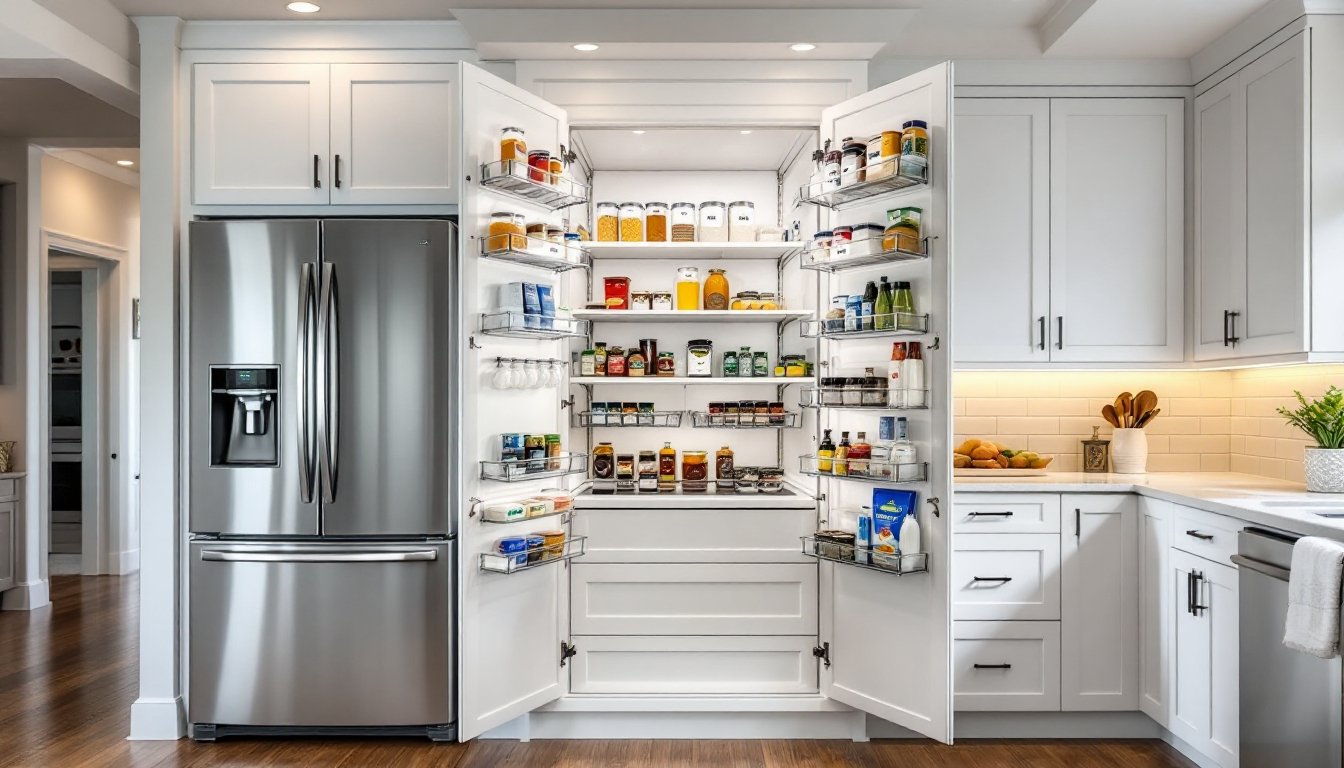
Kitchen storage problems usually come down to one thing: not enough dedicated pantry space. Canned goods pile up on counters, cereal boxes crowd the fridge top, and dry goods scatter across three different cabinets. Pantry kitchen cabinets solve this by consolidating food storage into purpose-built units with adjustable shelving, pull-out drawers, and door-mounted racks. Whether retrofitting an existing kitchen or designing a new layout, the right pantry cabinet can double usable storage without expanding the room’s footprint. This guide covers cabinet types, layout considerations, and practical organization strategies for homeowners ready to eliminate kitchen clutter.
Table of Contents
ToggleKey Takeaways
- Pantry kitchen cabinets consolidate scattered food storage into purpose-built units with adjustable shelving and pull-out drawers, potentially doubling usable storage without expanding your kitchen’s footprint.
- Choose between stock cabinets (pre-manufactured, $300–$800) and custom pantry cabinets ($1,200+) based on your budget, timeline, and kitchen dimensions.
- Pull-out and tall cabinet pantries maximize vertical storage in compact kitchens, with proper wall-stud installation and quality drawer slides essential for safely supporting 200–400 lbs of canned goods and appliances.
- Optimize pantry cabinet organization by adjusting shelf spacing to match storage needs (6″–8″ for spices, 12″–16″ for boxed items), using clear containers with labels, and limiting door-mounted racks to lightweight items only.
- Install LED lighting, rotate stock using the FIFO method (first in, first out), and avoid overstuffing shelves to maintain pantry functionality and prevent food spoilage.
- Position pantry cabinets near the refrigerator or stove within your kitchen work triangle to streamline workflow and reduce bottlenecking during meal preparation.
What Are Pantry Kitchen Cabinets?
Pantry kitchen cabinets are dedicated storage units designed specifically for food, dry goods, small appliances, and bulk items. Unlike standard base or wall cabinets, pantry cabinets typically feature full-height access (often 84″ to 96″ tall), deeper shelving (12″ to 24″ depth), and specialized interior hardware like pull-out shelves, lazy Susans, or roll-out trays.
They come in two basic construction types: stock cabinets (pre-manufactured in standard sizes, delivered within weeks) and custom cabinets (built to exact kitchen dimensions, longer lead times, higher cost). Stock pantry cabinets typically start at 12″ wide and increment in 3″ steps up to 36″ wide. Custom units can match any dimension and accommodate irregular spaces or ceiling heights.
Most pantry cabinets use frameless (European-style) or face-frame construction. Frameless cabinets maximize interior space since there’s no front frame eating into the opening, while face-frame cabinets offer more traditional aesthetics and slightly easier installation on uneven walls. For structural loads, pantry cabinets anchored to wall studs can safely support 200–400 lbs when properly installed with the right hardware, critical when storing canned goods or small appliances.
Pantry cabinets often integrate with kitchen design ideas that prioritize function over square footage, making them especially valuable in smaller homes or galley kitchens where every inch counts.
Types of Pantry Kitchen Cabinets for Every Space
Walk-In Pantry Cabinets
Walk-in pantries aren’t cabinets in the traditional sense, they’re small rooms (usually 4′ × 4′ minimum) lined with shelving units, cabinets, or a mix of both. Wall-mounted shelving (12″ to 16″ deep) along three walls provides maximum visibility and access, while base cabinets with countertops create a staging area for small appliances like stand mixers or food processors.
If converting a closet or underutilized space into a walk-in pantry, confirm the door opening is at least 32″ wide to meet accessibility standards and allow passage with grocery bags. Install wire or solid shelving using heavy-duty brackets rated for at least 50 lbs per linear foot. Adjustable shelving (with holes drilled on 1.5″ or 2″ centers) allows reconfiguration as storage needs change.
Walk-ins require adequate ventilation to prevent moisture buildup that can spoil dry goods. If the space lacks HVAC venting, add a passive vent or louvered door to maintain airflow. Lighting is non-negotiable: install an LED ceiling fixture or motion-activated strip lights under each shelf for visibility in corners.
Pull-Out and Roll-Out Pantry Cabinets
Pull-out pantry cabinets fit into narrow spaces, often 6″ to 12″ wide, and slide out on full-extension drawer glides or heavy-duty slides rated for 100+ lbs. They’re ideal for filling gaps between appliances or flanking a refrigerator. Most units feature wire baskets or solid trays stacked vertically, with 4 to 6 tiers per cabinet.
Installation requires securing the cabinet box to wall studs (not just drywall) and using soft-close drawer slides to prevent slamming. Blum Tandem or Grass DWD XP slides are common in mid-grade to high-end builds. Cheaper friction slides wear out quickly under weight.
Roll-out trays inside standard cabinets offer similar functionality without replacing the entire unit. Retrofit kits (available at home centers for $40–$80 per tray) include bottom-mount slides and a plywood or wire tray. Measure the interior cabinet width minus 2″ for slide clearance, and confirm the cabinet back is solid enough to anchor the rear slide bracket.
Many homeowners browse pantry cabinet options for compact kitchens when planning pull-out installations, as these designs maximize vertical storage in tight quarters.
Tall Cabinet Pantries
Tall cabinet pantries (also called utility cabinets or full-height pantries) range from 18″ to 36″ wide and extend from floor to ceiling or soffit. Single-door units work for narrower widths (18″–24″), while double-door cabinets (30″–36″) improve access to deeper shelves without reaching over door-mounted racks.
Interior configurations vary widely:
- Fixed shelving: Least expensive, but inflexible once installed.
- Adjustable shelves: Pegs or clips allow repositioning in 1.5″ increments.
- Pull-out shelves: Each shelf slides forward on undermount or side-mount glides.
- Swing-out shelves: Shelves pivot outward for corner pantry cabinets.
For storage efficiency, spec 11″ to 14″ shelf depth, deep enough for dinner plates and cereal boxes, shallow enough to avoid items getting lost in back. Shelves deeper than 16″ require pull-out hardware or risk becoming black holes.
Door-mounted racks add 20–30% more storage but increase door weight. Verify hinges are rated for the added load (typically Euro hinges rated at 110° opening and 20+ lbs per pair). Soft-close hinges cost $8–$15 per pair and prevent cabinet doors from banging into adjacent walls or appliances.
Installation requires locating wall studs and using 3″ cabinet screws through the cabinet back rail into studs. If studs don’t align, use a French cleat or heavy-duty toggle bolts (rated 100+ lbs each). Never rely on drywall anchors alone for full-height cabinets, they will fail under load.
Choosing the Right Pantry Cabinet for Your Kitchen Layout
Start by measuring available space, not just width, but also depth and ceiling height. Standard base cabinets are 24″ deep: pantry cabinets range from 12″ to 24″ deep. In tight galley kitchens, a 12″ deep pantry cabinet along one wall keeps the walkway clear (minimum 42″ aisle width for single cook, 48″ for two cooks per IRC guidelines).
Consider door swing and clearance. A 24″ wide cabinet with a full swing door requires roughly 28″ of clearance when open. In cramped layouts, pocket doors, bi-fold doors, or sliding barn doors eliminate swing radius but add hardware complexity and cost.
Placement matters. Position pantry cabinets within the kitchen work triangle (the path between sink, stove, and refrigerator) or just outside it to avoid bottlenecking workflow. A pantry next to the refrigerator streamlines unloading groceries: one near the stove keeps cooking oils and spices within arm’s reach.
For kitchens with awkward corners or angled walls, explore pantry cabinet inspirations showcasing corner units, L-shaped configurations, and creative solutions for non-standard layouts.
Match cabinet finish and construction to existing cabinetry. If current cabinets are face-frame with inset doors, a frameless pantry cabinet will look out of place. Bring a cabinet door to the showroom or snap a photo of the interior construction (frame style, hinge type, shelf pin holes) for accurate matching.
Budget for the full system: cabinet box, hardware (hinges, slides, shelf pins), installation labor if not DIYing, and finishing (paint or stain if unfinished). Stock cabinets run $300–$800 for a basic 18″ × 84″ tall pantry: custom units start at $1,200 and climb quickly with upgraded interiors. Pull-out shelves add $60–$150 per shelf depending on slide quality.
Organization Tips to Maximize Your Pantry Cabinet Storage
Adjustable shelving is only useful if you actually adjust it. Most pantries ship with shelves spaced evenly at 12″ intervals, fine for canned goods, wasteful for cereal boxes or bulk bags. Reconfigure shelves to match what you store: 6″–8″ spacing for spice jars and cans, 12″–16″ for boxed goods, 18″+ for small appliances.
Use clear storage containers for dry goods (flour, sugar, rice, pasta). Square or rectangular containers (not round) pack tighter and prevent wasted corner space. Label containers with contents and expiration dates using a label maker or painter’s tape and a Sharpie.
Door-mounted racks should hold lightweight items only, spices, foil and plastic wrap, seasoning packets. Avoid storing canned goods or jars on doors: the weight stresses hinges and can cause sagging over time. If adding aftermarket door racks, use heavy-duty adhesive hooks or screw-mounted brackets into the door frame (not the door panel itself, which may be hollow or thin veneer).
Install pull-out baskets or bins on lower shelves for root vegetables (potatoes, onions) that need airflow. Wire or perforated plastic bins prevent moisture accumulation. Reserve the lowest shelf or floor space for bulk items like dog food bags or cases of bottled water.
For visibility, add LED strip lighting along the underside of each shelf or a motion-activated puck light near the top of the cabinet. Hardwired LED strips (12V or 24V) require a transformer but provide even lighting: battery-operated pucks are easier to install but need periodic battery swaps.
Lazy Susans (rotating trays) work well for corner pantries or deep shelves, keeping items at the back accessible without digging. Choose models with non-slip surfaces to prevent bottles or jars from sliding off during rotation.
Safety reminder: When installing pantry cabinets or heavy shelving, always wear safety glasses when drilling into walls (drywall dust and tile fragments can fly). Use a stud finder to locate framing before driving screws, toggle bolts are a backup, not a first choice for heavy loads.
Rotate stock regularly using the FIFO method (first in, first out). Place newly purchased items behind older ones so nothing expires unnoticed. Check pantry contents quarterly and donate unexpired items you won’t use.
Avoid overstuffing shelves. Shelves loaded beyond their weight rating (typically stamped on adjustable shelf pins or listed in cabinet specs) will bow or collapse. If a shelf feels springy or bows visibly under load, redistribute weight or add a center support cleat (a scrap of 1× lumber screwed to the cabinet back at shelf height).