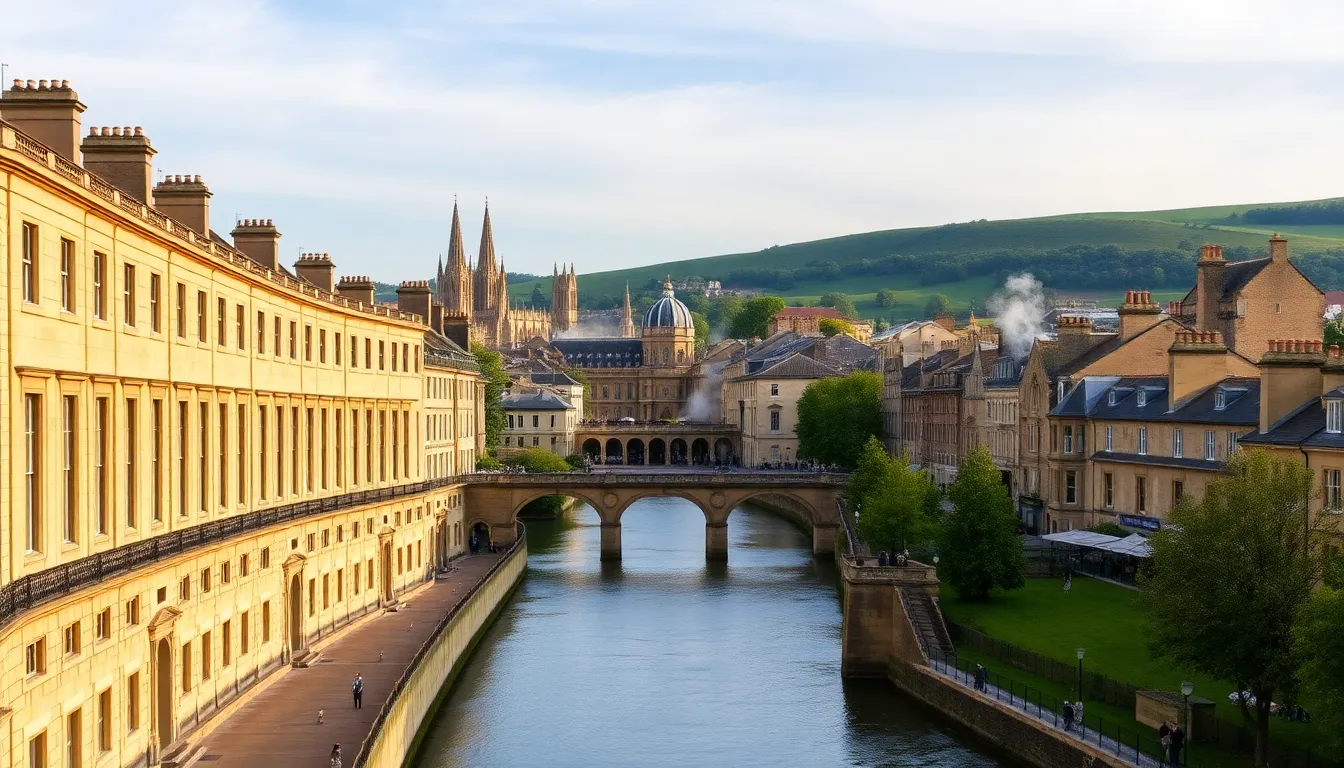
What is Bath? It’s a city in southwest England known for its natural hot springs and stunning Georgian architecture. Located in Somerset, Bath has drawn visitors for over 2,000 years. The Romans built elaborate bathhouses here. Georgian aristocrats transformed it into a fashionable spa destination. Today, Bath holds UNESCO World Heritage status and welcomes millions of tourists annually. This guide covers the city’s rich history, its most famous landmarks, and why Bath remains a must-visit destination in 2025.
Table of Contents
ToggleKey Takeaways
- Bath is a UNESCO World Heritage city in southwest England, famous for its natural hot springs and stunning Georgian architecture.
- The Romans founded Bath around 60 AD and built elaborate bathhouses around the thermal springs, which still flow at 46°C today.
- Top attractions include the Roman Baths, Bath Abbey, the Royal Crescent, and the unique shop-lined Pulteney Bridge.
- Bath experienced its golden age in the 18th century when architects John Wood the Elder and Younger designed its iconic Georgian buildings.
- The city offers excellent dining, shopping, and festivals while serving as a convenient base for visiting Stonehenge and the Cotswolds.
- Bath is easily accessible by a 90-minute train from London and compact enough to explore entirely on foot.
The History of Bath
Bath’s history stretches back nearly 10,000 years. Archaeological evidence shows Mesolithic hunters camped near the hot springs. But the city’s written history begins with the Romans.
The Romans arrived around 60 AD and discovered the natural thermal springs. They named the settlement Aquae Sulis, meaning “waters of Sulis” after a Celtic goddess. They constructed a bathing complex and temple that attracted visitors from across the Roman Empire. The spring water emerges at 46°C (115°F) and flows at a rate of 1.17 million liters per day. The Romans believed these waters had healing properties.
After the Romans left Britain in the 5th century, Bath fell into decline. The Anglo-Saxons eventually rebuilt the town. In 973 AD, Edgar became the first king crowned over all of England in a ceremony at Bath Abbey.
Bath experienced its golden age during the 18th century. Three men shaped this transformation: architect John Wood the Elder, his son John Wood the Younger, and entrepreneur Richard “Beau” Nash. The Woods designed the city’s iconic Georgian buildings, including the Royal Crescent and the Circus. Nash established Bath as England’s premier social destination. Wealthy visitors came to “take the waters” and enjoy the city’s assembly rooms, concerts, and balls.
In 1987, UNESCO designated Bath as a World Heritage Site. The organization recognized Bath’s Roman remains and 18th-century urban planning as outstanding examples of human history. Bath remains one of only a handful of entire cities to receive this designation.
Famous Landmarks and Attractions
Bath offers visitors a remarkable collection of historic sites. The city packs centuries of history into a compact, walkable area.
The Roman Baths
The Roman Baths stand as Bath’s most famous attraction. Over one million people visit annually, making it one of Britain’s most popular heritage sites.
The complex includes the Great Bath, a lead-lined pool surrounded by Roman columns and statues. Visitors can see the original Roman stonework and engineering. The site also features the Sacred Spring, where hot water still bubbles up from deep underground. A museum displays thousands of Roman artifacts found during excavations, including coins, jewelry, and curse tablets.
The current building above the baths dates from the 19th century. Visitors cannot swim in the ancient baths due to safety concerns. But, the nearby Thermae Bath Spa offers a modern facility where people can bathe in Bath’s thermal waters.
Bath Abbey and Georgian Architecture
Bath Abbey dominates the city center. This Gothic church dates from the 15th century, though a church has stood on this site since the 7th century. The abbey features stunning fan vaulting and large stained glass windows. Visitors can climb the tower for panoramic views of Bath.
Georgian architecture defines Bath’s appearance. The Royal Crescent ranks among England’s finest examples of Georgian design. John Wood the Younger completed this sweeping row of 30 terraced houses in 1774. Number 1 Royal Crescent operates as a museum showing how wealthy Georgians lived.
The Circus, designed by John Wood the Elder, forms a perfect circle of 33 townhouses. Three streets radiate from this space, creating a symbolic reference to sun worship and Druidic traditions.
Pulteney Bridge crosses the River Avon and features shops along both sides. Only four bridges in the world share this design. The bridge connects the city center to Great Pulteney Street, one of Bath’s grandest thoroughfares.
Why Visit Bath Today
Bath attracts visitors for many reasons beyond its history. The city offers excellent food, shopping, and cultural events throughout the year.
The dining scene in Bath has grown significantly. Several restaurants hold prestigious awards. Independent cafes and bakeries line the historic streets. The city hosts a weekly farmers’ market and several food festivals.
Shopping in Bath combines high-street chains with independent boutiques. The SouthGate shopping center provides modern retail space. Meanwhile, small shops in the city’s lanes sell antiques, books, and local crafts.
Bath hosts numerous festivals and events. The Bath Festival brings music and literature to venues across the city each May. Christmas markets transform the streets during November and December. The Jane Austen Festival celebrates the author who lived in Bath from 1801 to 1806.
Bath serves as an excellent base for exploring southwest England. Stonehenge lies 40 miles away. The Cotswolds begin just north of the city. Bristol, with its own attractions and airport, sits only 12 miles west.
Getting to Bath is straightforward. Direct trains from London Paddington take about 90 minutes. The city has good road connections via the M4 motorway. Bristol Airport offers domestic and European flights.
Bath remains compact enough to explore on foot. Most attractions sit within a 15-minute walk of each other. This accessibility makes Bath ideal for day trips or weekend visits.