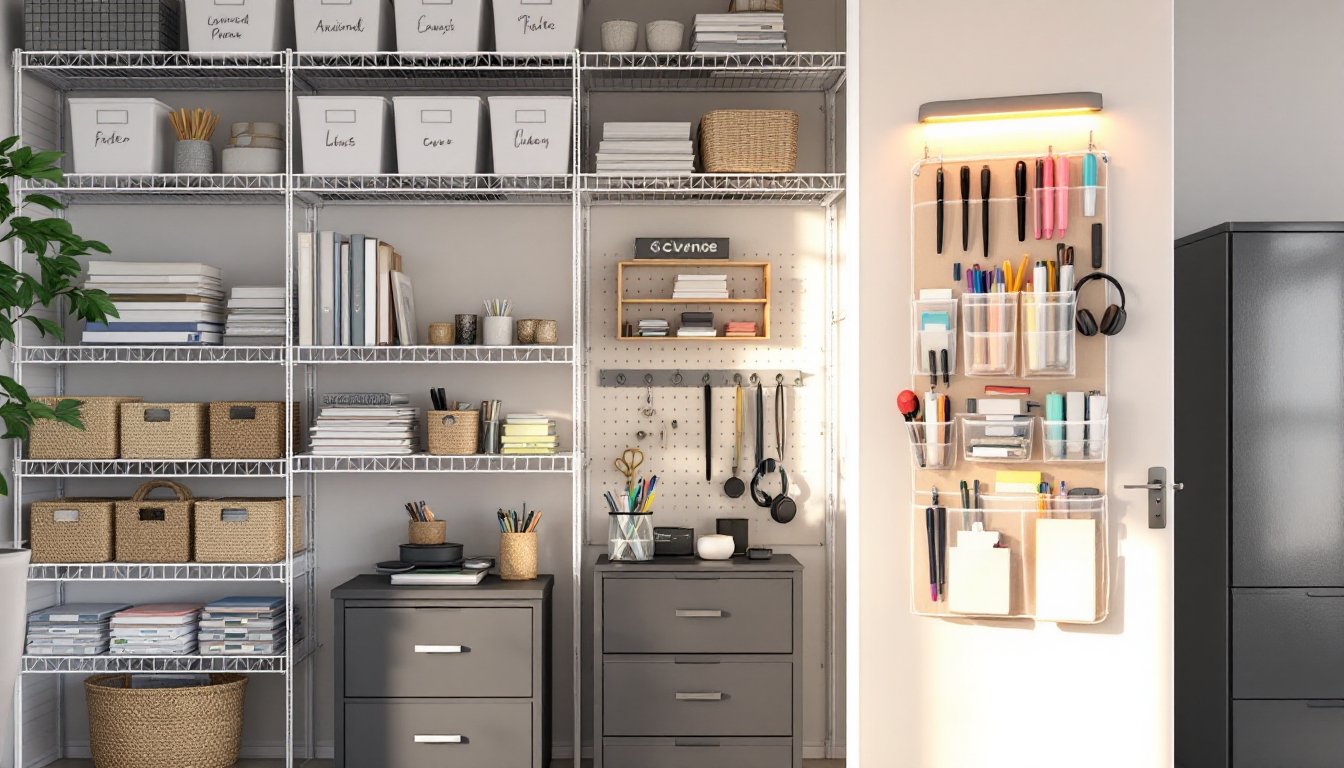
An office closet often becomes a dumping ground for supplies, old tech, and paperwork that doesn’t have a clear home. But with a few strategic changes, that cramped space can evolve into a functional storage hub that saves time and reduces daily friction. Proper organization isn’t about aesthetics, it’s about creating systems that make tools, files, and materials easy to locate and maintain. Whether the closet is a 24-inch reach-in or a walk-in utility room, the same principles apply: maximize vertical space, use adjustable components, and group items by frequency of use.
Table of Contents
ToggleKey Takeaways
- Office closet organization reduces search time, prevents duplicate purchases, and protects equipment by assigning every item a visible, accessible home.
- Adjustable shelving systems and modular components like wire racks, melamine shelves, and pull-out baskets maximize vertical space and adapt as storage needs change.
- Small office closets benefit from creative layering using pegboard, tension rods, magnetic strips, and door-mounted organizers to optimize limited space.
- Proper lighting with LED strips or motion-sensor puck lights, consistent labeling with a label maker, and floor-level platforms prevent damage and make inventory obvious at a glance.
- A well-organized closet strategy should separate daily essentials on an external rolling cart from backup inventory and archived materials stored within the closet itself.
Why Your Office Closet Deserves Better Organization
Most office closets fail because they’re treated as overflow zones instead of active work zones. When supplies are piled on a single shelf or crammed into cardboard boxes, retrieval becomes a frustrating game of digging and restacking. That friction adds up, wasted minutes every day, missed deadlines when critical files are buried, and unnecessary purchases because no one knows what’s already on hand.
A well-organized closet does three things. First, it reduces search time by assigning every item a visible, accessible home. Second, it prevents duplicate purchases by making inventory obvious at a glance. Third, it protects equipment and documents from damage caused by stacking, moisture, or dust. These benefits apply whether the space stores printer paper and toner or reference binders and seasonal marketing materials.
Before buying organizers or ripping out existing shelves, take inventory. Empty the closet completely and sort items into categories: active files, archived documents, office supplies, tech accessories, and miscellaneous. Discard expired supplies, recycle old manuals, and set aside items that belong elsewhere. This step reveals how much usable space exists and which categories demand the most room. It also exposes structural issues, sagging shelves, missing anchors, or inadequate lighting, that need attention before new systems go in.
Essential Storage Solutions for Every Office Closet
Vertical Shelving and Adjustable Systems
Fixed shelving wastes space. A single 12-inch gap between shelves might be perfect for reams of paper but leaves six inches of dead air above shorter items like staplers or tape dispensers. Adjustable shelving systems solve this by allowing shelf height to change as storage needs evolve.
Wire shelving kits (like ClosetMaid or similar brands) mount to wall studs using metal standards and brackets. These systems support 50–75 pounds per linear foot when properly anchored into studs with 3-inch wood screws or toggle bolts in drywall. Wire racks allow air circulation, which helps in humid climates, but small items can tip through the gaps. Add shelf liners or use bins to prevent this.
Wood or melamine shelving offers a solid surface but requires more planning. Use 3/4-inch melamine particleboard or plywood for spans up to 36 inches: longer spans need a center support or thicker material to prevent sagging under load. Cut shelves to fit using a circular saw with a fine-tooth blade, and support each shelf with L-brackets rated for the expected weight. Paint-grade pine or poplar boards work well if the closet will remain visible, but melamine is more cost-effective for enclosed spaces.
For deeper closets (24 inches or more), consider pull-out shelving or sliding baskets. These allow access to items at the back without removing everything in front. Many organization techniques rely on making deep storage functional rather than letting it become a black hole.
Drawer Units and File Cabinets
Drawers keep small items contained and reduce visual clutter. Rolling drawer carts (often sold as craft storage) fit under hanging shelves and provide compartments for pens, clips, cables, and sticky notes. Look for units with casters that lock to prevent rolling during use.
Lateral file cabinets (36 inches wide, two or four drawers high) handle letter- and legal-size hanging folders. A two-drawer lateral unit doubles as a work surface if topped with a 3/4-inch plywood or butcher block countertop. Secure the cabinet to the wall with furniture anchors to prevent tip-over, especially if drawers will be fully loaded. File cabinets are heavy when full, a four-drawer unit can exceed 400 pounds, so confirm that floor joists can handle the load if the closet is above a basement or crawlspace.
Vertical file cabinets (15 inches wide, two to five drawers tall) fit in narrow closets where lateral units won’t. They’re less stable, so anchoring is mandatory. Use a stud finder to locate solid backing, then drive 1/4-inch lag screws through the cabinet’s top mounting holes into the studs.
For tech accessories, chargers, adapters, external drives, shallow drawers with dividers prevent tangling. Many people use plastic drawer organizers meant for utensils: these work well and cost less than specialty office products. Check secondhand stores for used metal parts bins or small-parts organizers originally designed for workshops.
Creative Ideas to Optimize Small Office Closets
Small closets (under 24 inches deep or 36 inches wide) demand creative layering. Standard shelving leaves gaps that can be filled with hooks, magnetic strips, and tension rods.
Mount pegboard on the back wall or inside the door. Use 1/4-inch tempered hardboard pegboard with metal hooks to hang scissors, tape, headphones, and extension cords. Space the pegboard 1/2 inch off the wall using washers or furring strips so hooks can slide in. Pegboard works best for items used daily, anything hung there should be within arm’s reach.
Tension rods installed between side walls create instant hanging space. A rod placed 6 inches below a shelf can hold binder clips on S-hooks or small baskets suspended by their handles. In closets with doors, mount a tension rod vertically in the corner to hang bags, headphones, or rolled blueprints.
Magnetic knife strips (typically 12–18 inches long) stick to metal studs or screw into wood studs. Use them to hold scissors, X-Acto knives, metal rulers, or small hand tools. They’re especially useful on the inside of closet doors where traditional hooks would interfere with the door swing.
Door-mounted organizers with clear pockets (originally designed for shoes) store supplies while keeping them visible. Avoid overloading, most over-the-door racks are rated for 10–15 pounds total, and exceeding this can damage the door or hinges. If the closet has a hollow-core door, reinforce the top edge with a solid wood strip before hanging heavy organizers.
Labeling is non-negotiable. Use a label maker or adhesive chalkboard labels on bins, drawers, and shelf edges. Consistent labeling prevents the “junk drawer effect” where categories blur and clutter returns. Many successful organization strategies emphasize labeling as the difference between temporary tidiness and lasting systems.
Lighting matters. Most closets have a single bulb or no light at all. Add a motion-sensor LED puck light or a stick-on LED strip powered by batteries or a plug-in adapter. Warm white (3000K) is easier on the eyes than daylight (5000K) for task lighting. If running new electrical, consult local codes, closet lighting must meet clearance requirements from shelving and stored materials per NEC Article 410.
For frequently used supplies, keep a small rolling cart just outside the closet. Stock it with daily essentials, pens, notepads, charging cables, so the closet itself holds backup inventory and archived materials. This reduces trips into the closet and keeps high-traffic items where they’re needed. Applying tested organization tips from other areas of the home often translates directly to office spaces.
Another underused trick: mount a narrow shelf (4–6 inches deep) above the door frame inside the closet. This dead space is perfect for rarely used items like seasonal decorations, archived tax documents, or spare equipment boxes. Access requires a step stool, so store only lightweight, low-priority items there.
Consider modular cube storage (like Ikea’s Kallax or similar systems). These units fit into closets and provide both open cubbies and closed compartments when paired with fabric bins. A 2×4 or 3×3 cube unit can replace a jumble of cardboard boxes while making contents easier to identify. Anchor tall cube units to the wall with the included hardware or L-brackets and drywall anchors rated for the load.
Finally, don’t overlook the floor. If the closet has enough height, place a low shelf or platform on the floor to raise stored items off the ground. This prevents water damage if a spill or leak occurs and makes it easier to vacuum or sweep under the shelf. Use 2×4 lumber and 3/4-inch plywood to build a simple platform about 4–6 inches high. This approach is common in proven organization examples where floor-level storage is unavoidable but protection is needed.
Conclusion
An organized office closet isn’t a one-time project, it’s a system that adapts as needs change. Start with adjustable shelving and modular components that can be reconfigured without major demo work. Label everything, light the space properly, and resist the urge to cram in more than the system can handle. When every item has a designated spot and retrieval takes seconds instead of minutes, the closet shifts from a source of frustration to a reliable asset.