Anyone who’s wiped down a window or mirror knows the frustration: you finish cleaning, step back, and the glass looks worse than when you started. Streaks, haze, and smudges mock your efforts. The problem isn’t you, it’s usually a combination of the wrong cleaner, poor technique, or both. Getting truly clear, streak-free glass doesn’t require expensive commercial products or professional help. With the right formula and a few simple techniques, anyone can achieve showroom-quality results on windows, mirrors, shower doors, and glass tabletops.
Table of Contents
ToggleKey Takeaways
- The perfect glass cleaner combines a mild solvent with water and evaporates without residue to prevent streaking and haze.
- A simple DIY vinegar-and-water solution works effectively for most household glass, while an alcohol-based formula is ideal for heavy grime and faster drying.
- Technique matters as much as the cleaner itself—use microfiber cloths or a squeegee, wipe in one direction, and avoid cleaning in direct sunlight for streak-free results.
- Avoid commercial glass cleaners with soap, wax, oils, or ammonia; instead, invest in quality tools like microfiber cloths and a squeegee to achieve professional-quality cleaning.
- Common mistakes like using too much cleaner, dirty wiping cloths, and ignoring humidity will sabotage results, so maintain dedicated glass-cleaning supplies and adjust technique based on environmental conditions.
What Makes a Glass Cleaner Perfect?
A perfect glass cleaner needs three core qualities: it dissolves grime effectively, evaporates without residue, and doesn’t require multiple passes to work.
The best formulas combine a mild solvent (like alcohol or vinegar) with water and sometimes a small amount of surfactant to break down oils and fingerprints. The solvent cuts through buildup, while quick evaporation prevents streaking. Commercial cleaners often add ammonia for heavy-duty cutting power, but it’s not necessary for most household glass and comes with strong fumes that require ventilation.
Evaporation rate matters more than most people realize. If your cleaner dries too slowly, you’ll fight streaks. If it dries too fast (common in direct sunlight or on hot glass), it leaves residue before you can wipe it clean. That’s why timing and environmental conditions play into results as much as the formula itself.
Avoid cleaners with soaps, waxes, or oils. These leave a film that attracts dust and creates that cloudy haze. Similarly, skip anything with dyes or heavy fragrances, they’re just extra chemicals that can leave residue. The cleaner should be as close to clear liquid as possible.
For standard household glass, a simple two- or three-ingredient mix outperforms most store-bought options. Save your money and mix your own.
DIY Glass Cleaner Recipes That Actually Work
The Classic Vinegar and Water Solution
This is the workhorse formula that’s been around for decades because it works.
Materials:
- 1 cup white distilled vinegar
- 1 cup water
- Spray bottle (16 oz or larger)
Mix equal parts white vinegar and water in a clean spray bottle. That’s it. The acetic acid in vinegar (typically 5% concentration) cuts through mineral deposits, soap scum, and light grease without leaving residue. It’s especially effective on bathroom mirrors and shower doors where hard water buildup is common.
The smell dissipates as it dries, usually within a minute or two, so don’t let the initial scent put you off. If you’re sensitive to the odor, add 5-10 drops of essential oil (lemon or orange work well), but keep it minimal to avoid leaving an oily film.
This formula works best on lightly soiled glass. For windows that haven’t been cleaned in months or exterior glass caked with pollen and grime, you’ll need something stronger.
Advanced Formula with Rubbing Alcohol
When you need serious cleaning power and faster drying time, rubbing alcohol is the answer.
Materials:
- 1 cup 70% isopropyl alcohol (rubbing alcohol)
- 1 cup water
- 1 tablespoon white vinegar
- Spray bottle
Combine the alcohol, water, and vinegar in your spray bottle. The alcohol acts as a powerful solvent that dissolves oils, adhesive residue, and stubborn grime. It also evaporates much faster than water alone, which reduces streaking, a major advantage when cleaning large windows or working in humid conditions.
This formula is what many professional cleaning services recommend for commercial and residential glass. The tablespoon of vinegar adds extra cutting power for mineral deposits without compromising the quick-dry benefits of the alcohol.
Safety note: Use this formula in a well-ventilated area. Isopropyl alcohol is flammable and produces fumes. Don’t use it near open flames or while smoking. Store it away from heat sources.
For automotive glass and mirrors, use 90% isopropyl alcohol instead of 70% for even faster evaporation and better results on oil films from fingerprints and dashboards.
Professional Techniques for Streak-Free Results
The cleaner is only half the equation. Technique determines whether you get crystal-clear glass or a streaky mess.
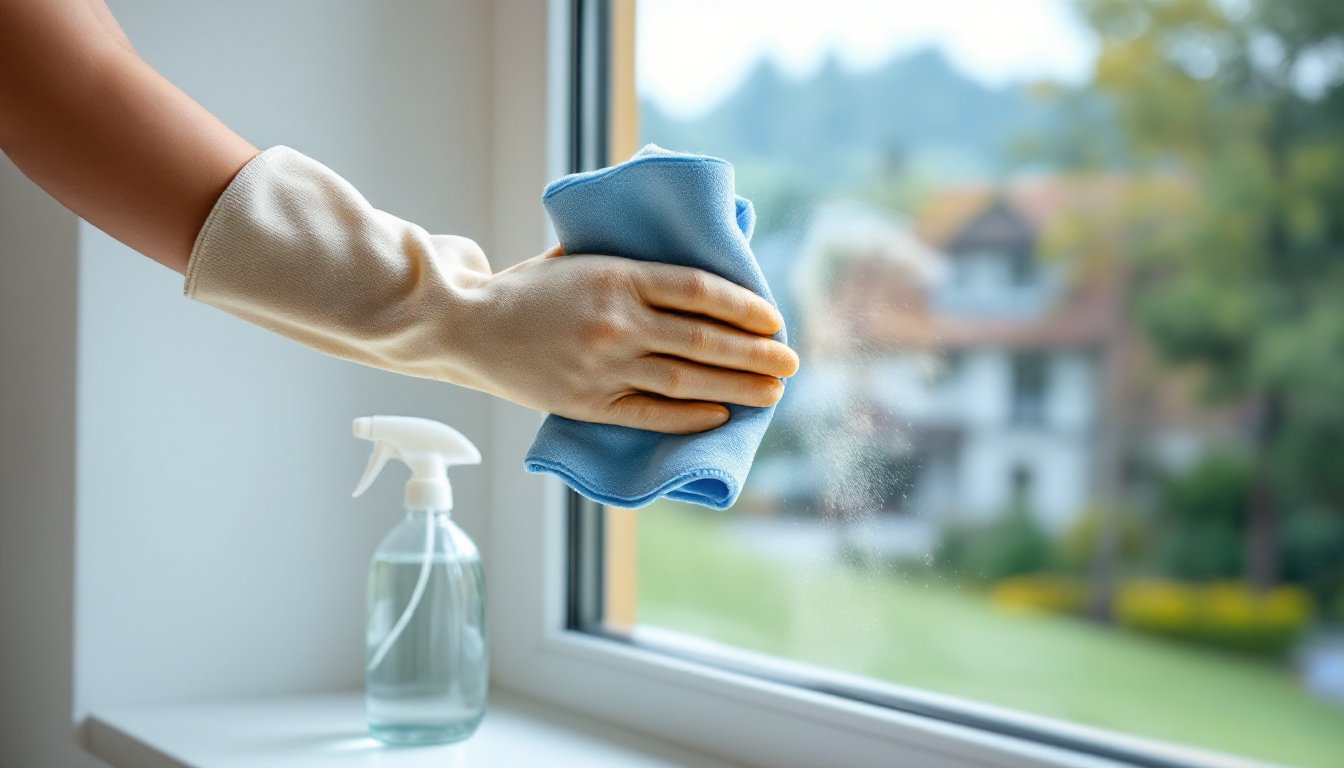
Use the right wiping material. Forget paper towels, most leave lint and don’t absorb well enough. Microfiber cloths are the professional standard. They’re lint-free, highly absorbent, and can be washed and reused hundreds of times. Use one damp cloth to apply and wipe the cleaner, then a second dry cloth to buff away any remaining moisture.
For large windows, a squeegee beats cloths every time. Choose one with a rubber blade at least 12 inches wide. Spray the glass, then pull the squeegee across in overlapping vertical strokes, wiping the blade with a clean cloth after each pass. Start at the top and work down to avoid drips running over clean areas.
Wipe in one direction, not circles. Circular motions tend to spread residue around rather than removing it. Horizontal or vertical strokes, whichever feels more natural, work best. Consistency matters more than direction.
Timing is everything. Don’t clean glass in direct sunlight or when the surface is hot. The cleaner will evaporate before you can wipe it, leaving streaks. Early morning or overcast days are ideal for exterior windows. For interior glass, any time works as long as you’re not cleaning next to a blazing fireplace or heat register.
If you’re tackling exterior windows, do a two-step process. First pass removes heavy dirt and grime, expect it to look worse before it looks better. Let it dry, then do a second pass with fresh cleaner and a clean cloth or squeegee. This prevents you from just smearing mud around.
For very dirty glass (construction dust, paint overspray, heavy oxidation), scrape it first with a razor blade held at a 45-degree angle to the glass. Keep the surface wet while scraping to avoid scratches. This works on flat glass only, never use a razor on curved auto glass or mirrors with coatings.
Common Glass Cleaning Mistakes to Avoid
Even with the right cleaner and tools, a few bad habits will sabotage your results.
Using too much cleaner is the most common mistake. More isn’t better, it just means more liquid to wipe away and more chance of streaking. A light, even mist is all you need. If cleaner is running down the glass, you’ve used too much.
Dirty wiping cloths are streak factories. If your microfiber cloth has been used to clean greasy counters or dusty shelves, it’ll transfer that grime to your glass. Keep dedicated glass-cleaning cloths separate from general-purpose rags. Wash them in hot water without fabric softener, which leaves a waxy residue.
Skipping the frame and sill means dust and grime from those surfaces will migrate back onto your clean glass the first time it rains or condensation forms. Wipe down the window frame, sill, and tracks before you clean the glass itself. For organization tips on keeping cleaning supplies tidy, a dedicated caddy for glass-cleaning tools helps maintain efficiency.
Re-using dirty water when cleaning multiple windows spreads dirt instead of removing it. If you’re doing a squeegee and bucket method, change the water after every few windows, especially on exteriors.
Ignoring humidity will frustrate even the best technique. High humidity slows evaporation and increases streaking. If you’re fighting losing battles with streaks on a humid day, wait for drier conditions or use the alcohol-based formula that evaporates faster.
Finally, don’t assume all glass is the same. Tinted windows, low-E coatings, and anti-glare treatments can be damaged by ammonia-based cleaners or abrasive scrubbing. Check manufacturer guidelines before cleaning specialty glass. When in doubt, test your cleaner on a small, inconspicuous area first. Many homeowners looking for organization and cleaning strategies find that maintaining a simple, tested routine beats constantly switching products.
Conclusion
Streak-free glass isn’t complicated, it just requires the right combination of formula, tools, and technique. Whether you’re using a simple vinegar solution or the alcohol-based formula for stubborn grime, consistency and proper wiping methods will give you professional results every time. Skip the expensive commercial cleaners and put that money toward quality microfiber cloths or a good squeegee instead.