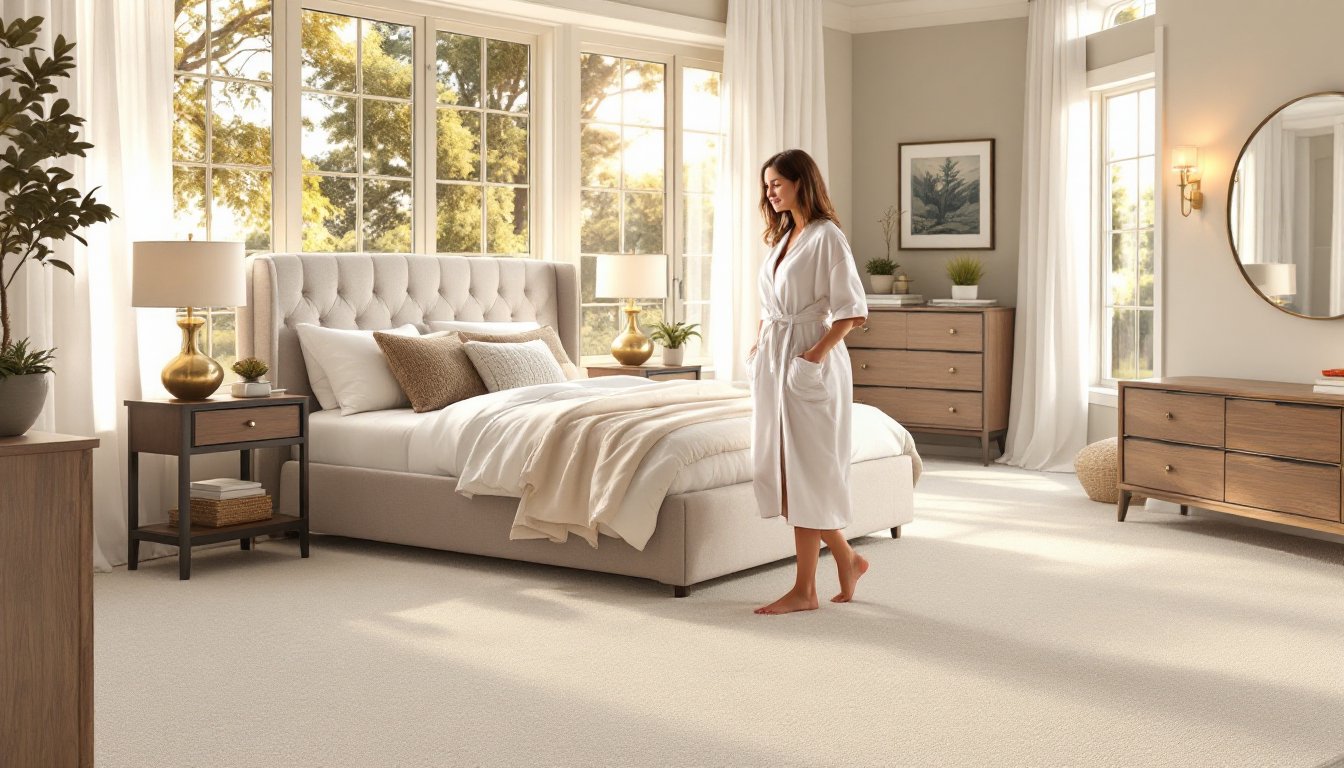
Bedroom flooring sets the stage for your most personal space. While hardwood and tile dominate elsewhere in the home, a luxury carpet underfoot transforms a bedroom from simply functional to genuinely restorative. The right carpet dampens sound, regulates temperature, and delivers tactile comfort that no hard surface can match. But not all carpet qualifies as “luxury”, the distinction lies in fiber density, construction quality, and material choice. This guide breaks down what makes a carpet truly luxurious, which materials deliver the best performance for bedrooms, and how to select and maintain an investment-grade floor covering that’ll last decades.
Table of Contents
ToggleKey Takeaways
- Luxury carpet for bedrooms outperforms budget options by providing superior acoustics, thermal insulation, and foot comfort that hard surfaces cannot match, with high-density construction (60-80 ounces per square yard) that lasts 15-20 years.
- Wool remains the gold standard material for luxury bedroom carpet, offering natural flame retardancy, static resistance, and a face weight of 50-60 ounces per square yard, though it requires professional cleaning every 12-18 months.
- Proper pad selection is essential for investment-grade flooring—use a memory foam or rebond pad at least 1/2 inch thick with 6-8 pounds per cubic foot density to extend carpet life by 50% and dramatically improve comfort.
- Cut-pile Saxony or frieze styles in natural fibers deliver the best balance of comfort and practicality for bedroom environments where soft, resilient surfaces reduce joint strain and hide wear patterns.
- Professional installation using the stretch-in method and consistent maintenance—vacuuming twice weekly, immediate spill treatment, and professional cleaning every 12-18 months—are critical to keeping luxury carpet pristine for decades.
- A no-shoes bedroom policy is the single most effective way to extend luxury carpet lifespan and maintain its appearance, while proper measurement planning (10-15% overage) and subfloor inspection prevent costly installation issues.
Why Luxury Carpet Transforms Your Bedroom Experience
Luxury carpet delivers three core benefits that budget options can’t replicate: superior acoustics, thermal insulation, and foot comfort that genuinely affects sleep quality.
First, dense pile construction, typically 60-80 ounces per square yard versus 30-40 for builder-grade carpet, absorbs footfall noise and dampens sound transmission between floors. If your bedroom sits above living spaces or shares a wall with noisy rooms, a thick wool or nylon plush acts as a secondary sound barrier. Expect a noise reduction coefficient (NRC) of 0.35-0.55 for quality carpet with a good pad, compared to 0.15 for hardwood.
Second, carpet’s R-value (thermal resistance) ranges from 1.0-2.5 depending on pile height and pad thickness. That’s not huge compared to wall insulation, but it’s enough to keep bedroom floors 5-10°F warmer than tile or engineered wood in winter. Bare feet notice.
Third, high-end carpet uses longer staple fibers and tighter tufting, which creates a resilient surface that bounces back underfoot. Cut pile styles like Saxony or frieze provide cushioning that reduces joint strain, a real advantage if someone in the household has mobility issues or spends time sitting on the floor. It’s not fluff: it’s biomechanics.
Luxury carpet also resists compression better than economy products. A well-constructed wool or premium nylon holds its loft for 15-20 years with proper maintenance, while cheaper polyester may mat down in high-traffic lanes within five. That longevity makes the upfront cost more defensible.
Top Luxury Carpet Materials for Bedrooms
Material choice dictates performance, feel, and maintenance requirements. Bedrooms allow you to prioritize softness and aesthetics over heavy-duty durability, but you still want something that handles regular foot traffic and cleans up well.
Wool: The Gold Standard for Bedroom Carpets
100% wool carpet remains the benchmark for luxury installations. Wool fibers are naturally crimped, which creates springiness and resilience. A quality wool carpet, such as an 80/20 wool-nylon blend from New Zealand or British mills, offers a face weight of 50-60 ounces per square yard and a pile height around 1/2 inch for plush styles.
Wool’s key advantages: it’s naturally flame-retardant (meets federal flammability standards without chemical treatments), resists static, and wicks moisture without feeling damp. It also takes dye exceptionally well, so colors stay rich and deep for years. The lanolin content in wool gives it some inherent stain resistance, though you’ll still want to treat spills quickly.
Downsides: wool costs $8-$15 per square foot installed (more for hand-knotted or specialty weaves), and it requires professional cleaning every 12-18 months. Avoid steam cleaners: wool needs low-moisture extraction to prevent shrinkage. If anyone in the household has wool sensitivities, test samples before committing to a full room.
For bedrooms, a cut-pile Saxony or textured frieze in wool delivers the best balance of comfort and practicality. Loop pile (Berber) works if you prefer a firmer feel, but it’s less forgiving underfoot. When choosing luxury homes ideas, selecting natural fiber flooring adds authenticity to high-end interiors.
Silk and Silk Blends for Ultimate Elegance
Silk carpet is the most opulent option, typically reserved for low-traffic bedrooms or as accent rugs rather than wall-to-wall installations. Pure silk fibers create an unmatched sheen and softness, but they’re delicate, expect a face weight of 30-40 ounces and pile heights around 3/8 inch.
Silk blends (often 30-50% silk with wool or high-grade nylon) offer more durability while retaining much of the visual appeal. These work well in master bedrooms where foot traffic is light and shoes rarely touch the floor. Silk resists moths and mildew naturally, but it stains easily and requires professional cleaning with pH-neutral solutions.
Cost runs $15-$30+ per square foot installed for silk blends. If budget allows and the bedroom truly functions as a retreat rather than a thoroughfare, silk delivers a tactile experience nothing else matches. Just keep pets and red wine out of the room.
For a more practical take on elegance, consider premium nylon (6,6-grade) with a dense, cut-pile construction and a silk-like finish. It won’t have the same luster, but it’ll handle real life better and cost 40-60% less.
How to Choose the Perfect Luxury Carpet for Your Bedroom
Start with pile density and face weight. Luxury carpet should have a face weight of at least 50 ounces per square yard and a density rating above 2,500 (calculated as pile weight × 36 / pile height). You can request these specs from any reputable dealer. Higher numbers mean better durability and a more substantial feel underfoot.
Next, pick your pile style based on how you use the room:
- Cut pile (Saxony, plush): Soft, formal look. Shows footprints and vacuum tracks. Best for adults-only bedrooms with minimal traffic.
- Frieze (twisted pile): More casual, hides footprints well, still very soft. Good for bedrooms that double as reading nooks or where kids occasionally play.
- Loop pile (Berber): Firm, durable, less luxurious underfoot. Works if you want a textured, modern look.
- Cut-and-loop: Combines textures for pattern. Visual interest but harder to vacuum thoroughly.
For bedrooms, most people prefer cut pile for comfort.
Color and pattern matter more in a bedroom than in high-traffic areas. Light neutrals (cream, taupe, soft gray) create a serene feel but show dirt faster. Mid-tones like heathered blues or greens hide soil well while still feeling upscale. Avoid pure white unless you institute a strict no-shoes policy and have no pets. Darker colors work in modern or moody designs covered by interior design experts, though they can make a small bedroom feel smaller.
Pad selection is non-negotiable for luxury carpet. Use a memory foam or rebond pad at least 1/2 inch thick with a density of 6-8 pounds per cubic foot. A good pad extends carpet life by 50% and dramatically improves comfort. Don’t let an installer talk you into a thin pad to save $1 per square foot, it’s false economy.
Finally, measure accurately. Bedrooms are usually straightforward rectangles, but closets, bay windows, and angled walls add waste. Plan for 10-15% overage. Standard carpet rolls come in 12- or 15-foot widths: sometimes you can orient the seam to run under the bed or along a less visible line. Discuss seam placement during the estimate.
Check your subfloor before ordering. Carpet installs over plywood, OSB, or concrete, but the surface must be clean, dry, and level within 3/16 inch over 10 feet. If you’re replacing old carpet, have the installer inspect for squeaky spots or moisture damage that needs addressing first. Fixing subfloor issues after carpet installation is expensive and disruptive.
Installation and Maintenance Tips for Luxury Bedroom Carpets
Installation for luxury carpet should always be done by a certified pro, especially for wool or silk. The stretching technique, seam placement, and pad attachment directly affect longevity and appearance. Expect to pay $2-$5 per square foot for labor, depending on room complexity and your region. Get at least two quotes and ask to see recent photos of their work, seams should be nearly invisible, and edges should be tight to the tack strips.
Standard installation uses the stretch-in method with perimeter tack strips and a separate pad. This allows for easier replacement down the line and provides the best cushioning. Glue-down installation is sometimes used over concrete slabs, but it’s less common for bedrooms and offers less comfort.
For the first 48 hours after install, keep traffic minimal and avoid placing heavy furniture on the carpet. Let it acclimate and settle. Once it’s fully stretched and settled, add furniture coasters (at least 3-4 inches in diameter) under bed legs, dressers, and nightstands to prevent permanent divots.
Maintenance determines whether your luxury carpet lasts 10 years or 25. Follow these practices:
- Vacuum twice per week with a HEPA-filter vacuum set to the correct pile height. For wool, turn off the beater bar or use a suction-only setting to avoid fiber damage. Many types of carpet materials and maintenance practices differ based on construction.
- Rotate area rugs if you layer them over the carpet, so wear patterns don’t develop in one spot.
- Blot spills immediately with a clean, white cloth. Dab, don’t rub, and work from the outside in. Use a pH-neutral carpet cleaner for anything beyond water. Test any cleaner in a closet corner first.
- Professional cleaning every 12-18 months using hot water extraction (for nylon) or low-moisture encapsulation (for wool). Silk requires a specialist, don’t attempt DIY cleaning.
- Use a dehumidifier if your bedroom tends toward dampness. Wool and silk can develop mildew if exposed to high humidity for extended periods.
PPE during maintenance: Wear a dust mask when vacuuming if you have allergies, carpet traps allergens effectively, but vacuuming can temporarily aerosolize them. If you’re moving furniture for deep cleaning, use work gloves to protect your hands and knee pads if you’re spot-treating stains manually.
Address snags immediately. If a loop pulls out, trim it level with scissors, don’t yank it. For wool, a skilled repair tech can re-tuft small damaged areas so they’re nearly invisible. Keep leftover carpet scraps for future patching.
Avoid oil-based cleaners, bleach, or hydrogen peroxide on any luxury carpet. They degrade fibers and void most warranties. Stick with products approved by the Carpet and Rug Institute (CRI) or your carpet manufacturer.
Finally, enforce a no-shoes policy if you want your luxury carpet to stay pristine. It’s the single most effective way to extend lifespan and reduce soil. Place a boot tray or bench outside the bedroom door to make the transition easy for everyone in the household.
Conclusion
Luxury bedroom carpet is a long-term investment that pays dividends in comfort, acoustics, and aesthetics. Choose materials based on how you live, wool for durability and natural performance, silk blends for elegance in low-traffic spaces, or premium nylon if you need resilience with a softer price point. Prioritize proper pad selection and professional installation, then commit to consistent maintenance. Done right, a luxury carpet can anchor your bedroom’s design and deliver barefoot comfort for decades.