A disorganized bedroom drains energy before the day even starts. Clothes pile up on chairs, drawers overflow, and flat surfaces disappear under clutter. The fix isn’t willpower, it’s the right furniture. Purpose-built bedroom organization furniture turns chaos into calm by giving every item a designated home. Whether dealing with a cramped studio or a sprawling master suite, strategic storage pieces create functional zones, maximize vertical space, and eliminate visual noise. The difference between a cluttered bedroom and an organized one often comes down to choosing furniture that works as hard as the homeowner does.
Table of Contents
ToggleKey Takeaways
- Investing in quality bedroom organization furniture can double or triple storage capacity while reducing visual clutter and improving room functionality daily.
- Storage beds with drawers or hydraulic lift platforms maximize the 20 to 30 cubic feet of space under a mattress, ideal for clothes, linens, and seasonal items.
- Dressers with dovetail joints and full-extension slides, along with wall-anchored tall chests per ASTM F2057 safety standards, provide durable storage that lasts decades.
- Small bedrooms benefit from multi-functional furniture like wall-mounted nightstands, modular closet systems, and storage ottomans that eliminate floor footprints and free up circulation space.
- Solid wood and quality plywood constructions outlast budget particleboard, making them smarter long-term investments even at higher upfront costs.
- Start bedroom organization planning with a room audit—measure dimensions, quantify what needs storing, and match furniture type to specific storage challenges rather than impulse buying.
Why Investing in Bedroom Organization Furniture Makes a Difference
Most bedrooms rely on mismatched hand-me-downs or impulse buys that don’t address actual storage needs. The result? Items without homes, surfaces buried under stuff, and wasted square footage.
Quality organization furniture solves three problems at once. First, it increases usable storage capacity, often doubling or tripling what a standard bed frame or basic dresser offers. Second, it reduces visual clutter by concealing items behind doors, inside drawers, or under platforms. Third, it improves room flow by eliminating piles on the floor and freeing up circulation space.
The return on investment shows up daily. Mornings move faster when clothes are sorted and accessible. Cleaning takes minutes instead of hours. Bedrooms actually function as restful retreats instead of stressful dumping grounds.
Building codes don’t regulate bedroom furniture (it’s not structural), but good design principles still apply. Furniture should be proportional to room size, allow for safe egress per International Residential Code (IRC) window and door clearances, and avoid blocking heating vents or electrical outlets. Freestanding pieces offer flexibility, no landlord approval needed, while built-ins add home value but require more commitment.
The best furniture investments are pieces that adapt over time. A storage bed works in a rental or a forever home. A modular closet system expands with a growing wardrobe. Cheap particleboard units fall apart during the first move: solid wood or quality plywood constructions last decades.
Essential Bedroom Organization Furniture Pieces
Not every bedroom needs every piece, but these core categories cover most storage challenges.
Storage Beds and Lift-Up Platforms
The space under a mattress is prime real estate, roughly 20 to 30 cubic feet for a queen-size bed with a standard 12-inch clearance. Storage beds tap into that volume with built-in drawers, lift-up platforms, or open cubbies.
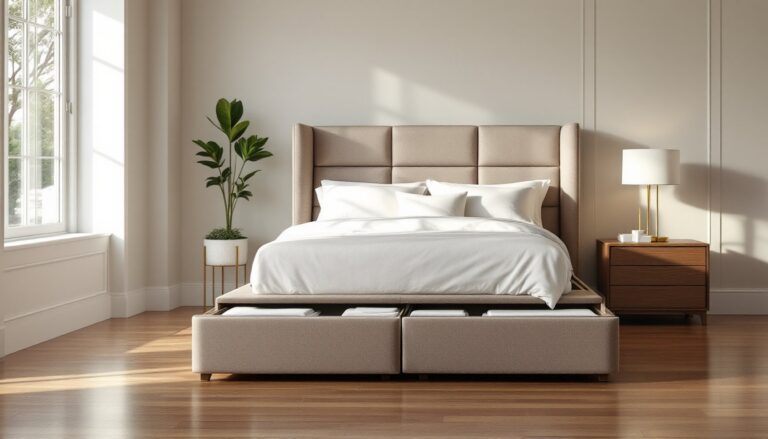
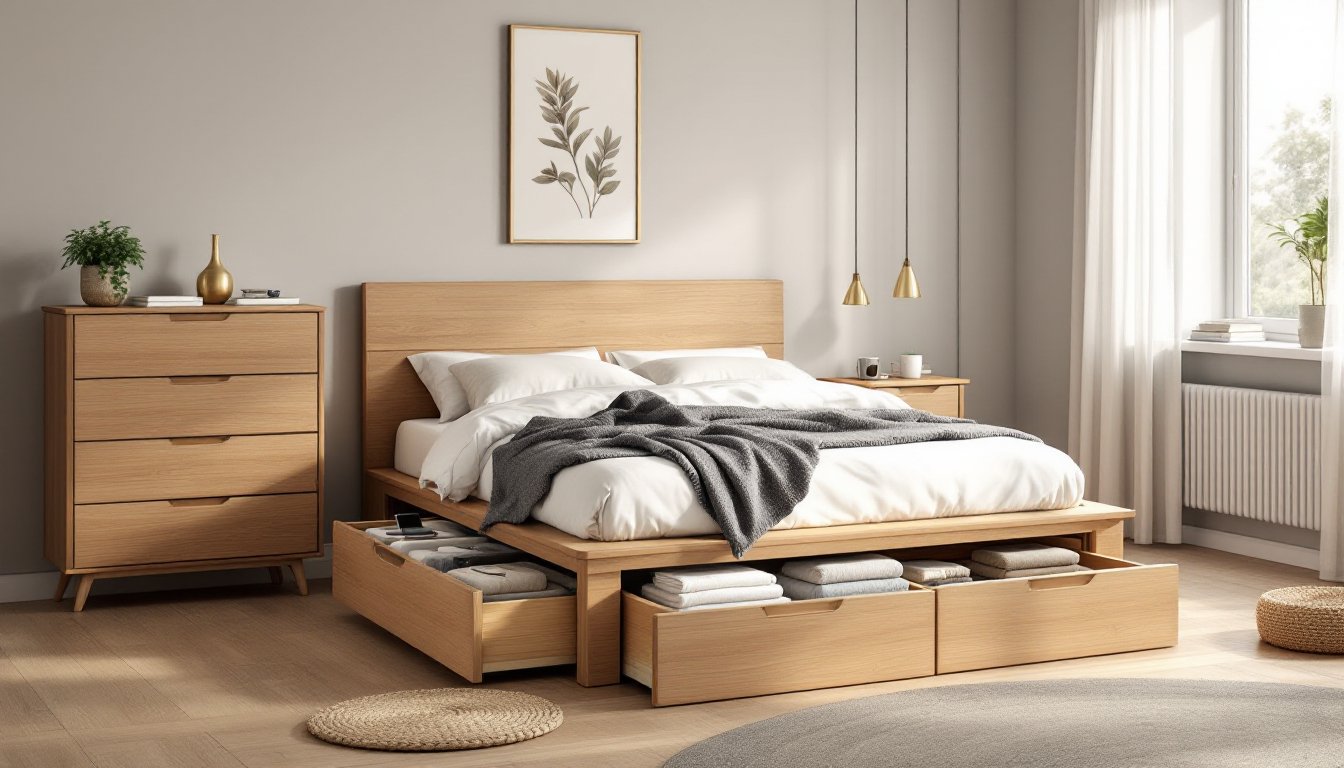
Drawer-style storage beds feature two to six drawers along the sides or footboard. They’re ideal for folded clothes, extra linens, or seasonal items. Look for models with full-extension ball-bearing slides, cheap roller tracks jam and sag under weight. Most drawer units require 12 to 18 inches of clearance on each side for full access, so measure the room layout before committing.
Hydraulic lift platforms use gas pistons to raise the entire mattress, revealing a deep storage compartment underneath. These systems handle bulkier items like suitcases, comforters, or off-season wardrobes. The lift mechanism does the heavy lifting (literally), but assembly requires two people and a few hours. Check weight ratings, most platforms support a combined load of 600 to 800 pounds (mattress, bedding, and stored items).
Platform beds with open cubbies offer quick-access storage without moving parts. They work well for shoes, baskets, or bins. Dust accumulation is the trade-off, items aren’t enclosed, so plan on regular vacuuming.
For DIYers building custom platforms, use 3/4-inch plywood for the deck and 2×4 or 2×6 dimensional lumber for the frame. Actual dimensions matter: a 2×4 measures 1.5 x 3.5 inches, a 2×6 is 1.5 x 5.5 inches. Reinforce the center span with a support beam if building anything larger than a full size to prevent sagging.
Dressers, Chests, and Armoires
Dressers remain the workhorse of bedroom storage. A standard six-drawer dresser provides 15 to 25 cubic feet of storage, enough for an adult’s everyday wardrobe. Tall chests (five or more drawers stacked vertically) save floor space in narrow rooms but must be anchored to the wall per ASTM F2057 furniture tip-over standards. Use the included anti-tip strap or install a 1/4-inch lag bolt into a wall stud, drywall anchors aren’t sufficient for a 150-pound dresser.
When evaluating build quality, check drawer joinery. Dovetail joints (interlocking fingers at corners) outlast stapled or glued corners. Drawer bottoms should be 1/4-inch plywood or solid wood, not flimsy particleboard. Test the slides, full-extension, soft-close mechanisms cost more but prevent slammed fingers and extend furniture life.
Armoires bring closet-level organization to rooms without adequate built-in storage. Modern units include adjustable shelves, hanging rods, and pull-out drawers. Measure ceiling height carefully, most armoires stand 72 to 84 inches tall and may not fit in rooms with low ceilings or ceiling fans.
Solid wood dressers (maple, oak, cherry) cost more upfront but handle decades of use. Plywood with hardwood veneer offers a middle ground, strong core with an attractive finish. Avoid pure particleboard for anything bearing regular weight: it crumbles at joints and doesn’t hold hardware well. Many homeowners find inspiration for mixing furniture styles and finishes when coordinating bedroom pieces.
Nightstands with Built-In Storage
Nightstands do more than hold a lamp and phone charger. Models with drawers, shelves, or cabinets keep books, medications, chargers, and bedside essentials corralled.
Standard nightstand height is 24 to 28 inches, roughly level with the top of a mattress. If using a storage bed or thick mattress topper, add 2 to 4 inches to maintain proportion. Width varies from 18 to 24 inches: in tight spaces, a floating wall-mounted shelf with a small drawer underneath saves floor space.
For rooms with zero floor space, consider wall-mounted floating nightstands. Install them into wall studs using 3-inch wood screws or heavy-duty toggle bolts rated for the unit’s weight plus contents. Use a stud finder and mark locations with a pencil before drilling, drywall alone won’t support even a lightweight shelf once loaded with books and a lamp.
USB-integrated nightstands are trending, but check the charging specs. Look for models with 2.4-amp or higher USB ports, anything less charges slowly. Hardwired units require access to an outlet behind the nightstand: battery-powered models skip the cords but need occasional recharging.
How to Choose the Right Organization Furniture for Your Bedroom
Start with a room audit, not a shopping cart. Measure the bedroom dimensions, door swing clearances, and existing furniture footprints. Walk the space and note problem areas: overflowing closets, piles on the floor, surfaces buried under stuff.
List what needs storing: everyday clothes, out-of-season wardrobe, shoes, accessories, linens, electronics. Quantify it, how many pairs of shoes? How many sweaters? Vague guesses lead to underbought furniture and continued clutter.
Match furniture type to storage needs. If the closet is maxed out, an armoire or tall chest adds hanging and folded storage. If the floor disappears under shoes and bags, a storage bed with drawers reclaims that space. If flat surfaces (dressers, nightstands) collect clutter, swap open-top designs for models with enclosed drawers or cabinets.
Consider room proportions. A king-size storage bed with a massive footboard overwhelms a 10×10 bedroom. In small spaces, choose streamlined pieces, platform beds with low profiles, narrow chests instead of wide dressers, wall-mounted options over floor-standing units. Applying proven organization ideas helps balance aesthetics with function.
Material and finish should complement existing decor, but durability trumps looks. Bedroom furniture takes daily wear, drawers slide open and closed hundreds of times a year, bed frames support shifting weight nightly. Solid wood, quality plywood, and metal frames outlast budget particleboard.
Budget realistically. Quality bedroom furniture ranges from moderate to expensive, but longevity offsets initial cost. A $600 solid wood dresser used for 20 years costs $30 per year. A $150 particleboard unit replaced every three years costs $50 per year and generates landfill waste. For tight budgets, prioritize one high-quality piece, like a storage bed, and phase in other items over time.
Don’t forget installation and assembly. Flat-pack furniture requires time, patience, and basic tools (screwdrivers, Allen wrenches, a rubber mallet). Lift-up bed platforms and wall-mounted units are two-person jobs. If the furniture arrives assembled or requires professional installation, factor delivery fees and tipping into the budget.
Safety checks: Anchor tall furniture to walls. Ensure drawer slides and lift mechanisms function smoothly. Avoid furniture with sharp corners in tight spaces, rounded edges prevent bruised shins in the dark.
Maximizing Small Bedrooms with Multi-Functional Furniture
Small bedrooms demand furniture that works overtime. Every piece should serve multiple purposes or offer hidden storage.
Storage beds are non-negotiable in tight spaces. A queen bed with six drawers replaces a separate dresser, freeing up 12 to 16 square feet of floor space. That’s enough room to add a reading chair, a small desk, or simply improve traffic flow.
Ottomans and storage benches at the foot of the bed provide seating, surface space, and hidden storage for blankets or shoes. Look for models with removable lids or flip-top hinges, slide-out drawers work too but require clearance.
Wall-mounted furniture eliminates floor footprints. Floating nightstands, fold-down desks, and wall-hung wardrobes keep the floor clear, making rooms feel larger. Install these into studs for safety, use a stud finder, mark with a level, and predrill holes to avoid splitting wood.
Modular closet systems maximize vertical space inside cramped closets. Add a second hanging rod to double hanging capacity. Install shelves above the rod for bins or folded items. Use slim velvet hangers instead of bulky plastic ones, they take up less rod space and prevent clothes from slipping. Many DIYers reference organization examples to see how others tackled similar challenges.
Corner units exploit dead zones. Corner dressers, triangular shelves, and angled armoires fit into spaces that can’t accommodate standard rectangular furniture.
Under-bed clearance is critical. If buying a bed without built-in storage, choose one with at least 12 inches of clearance. Slide low-profile bins underneath for shoes, accessories, or off-season clothes. Use rolling bins for easy access, static bins shoved deep under a bed become black holes.
Mirrors and light-colored finishes don’t add storage but make small rooms feel larger and brighter, an important consideration when adding furniture. A mirrored dresser or armoire door reflects light and creates the illusion of depth.
Skip bulky furniture in small rooms. Avoid oversized armoires, king beds (unless the room is truly tiny and the bed is the only furniture), or deep dressers that jut into walkways. Measure twice, buy once, tape out furniture dimensions on the floor before purchasing to visualize the actual footprint.