Transforming a bedroom into a mansion-caliber retreat isn’t about throwing money at expensive furniture. It’s about understanding the architectural bones, material choices, and spatial strategies that separate grand luxury suites from standard sleeping quarters. The difference lies in ceiling treatments, finish-grade materials, lighting layers, and the kind of thoughtful layout planning that makes a room feel both expansive and intimate. Whether you’re building new construction or renovating an existing master suite, these design principles translate across budgets and square footage, though yes, more space helps.
Table of Contents
ToggleKey Takeaways
- A luxury master bedroom in a mansion starts with scale—typically 400+ square feet with 10-12 foot ceilings and distinct zones for sleeping, sitting, dressing, and workspace.
- Architectural features like substantial crown molding (5-8 inches), coffered ceilings, and premium wall paneling create the structural luxury baseline that defines upscale master bedroom design.
- High-quality materials including wide-plank hardwood flooring, wool or high-density carpet, and layered window treatments with ceiling-height drapery rods elevate the room’s overall aesthetic.
- Strategic lighting layers—ambient, task, accent, and decorative—with dimmer switches and smart controls enable personalized ambiance while avoiding glare over the bed.
- Thoughtful layout planning with the bed as a central anchor, separate seating zones, discreet closet access, and clear traffic flow transform a mansion luxury master bedroom into a functional retreat.
- Invest in mattress quality over frame style, layer bedding with premium materials, and incorporate climate control features like ceiling fans and HVAC zoning for year-round comfort.
What Defines a Luxury Master Bedroom in a Mansion
A luxury master bedroom in a mansion luxury master bedroom starts with scale. Most standard bedrooms run 12×12 or 14×16 feet. Mansion suites typically begin at 400 square feet and often exceed 800, enough to accommodate distinct zones: sleeping, sitting, dressing, and sometimes private office space.
Ceiling height matters more than most homeowners realize. Standard residential ceilings sit at 8 or 9 feet. Luxury suites push to 10, 11, or even 12 feet, often with coffered, tray, or vaulted treatments that add architectural drama. This vertical volume changes how light moves through the space and how furnishings relate to the room’s proportions.
Private en-suite bathrooms aren’t just attached, they’re integrated as spa-like extensions with direct sightlines controlled by pocket doors or frosted glass partitions. Walk-in closets (or entire dressing rooms) function as separate zones with built-in cabinetry, islands, and dedicated lighting. These aren’t afterthoughts: they’re planned into the structural layout from the start.
Natural light plays a defining role. Mansion bedrooms often feature multiple window exposures, French doors to private balconies or terraces, or floor-to-ceiling glass that frames views. Window placement isn’t random, it’s coordinated with furniture layout so bed position, seating areas, and walkways all benefit from daylight without glare or privacy issues.
Essential Design Elements for Mansion-Style Master Bedrooms
Elevated Architectural Features
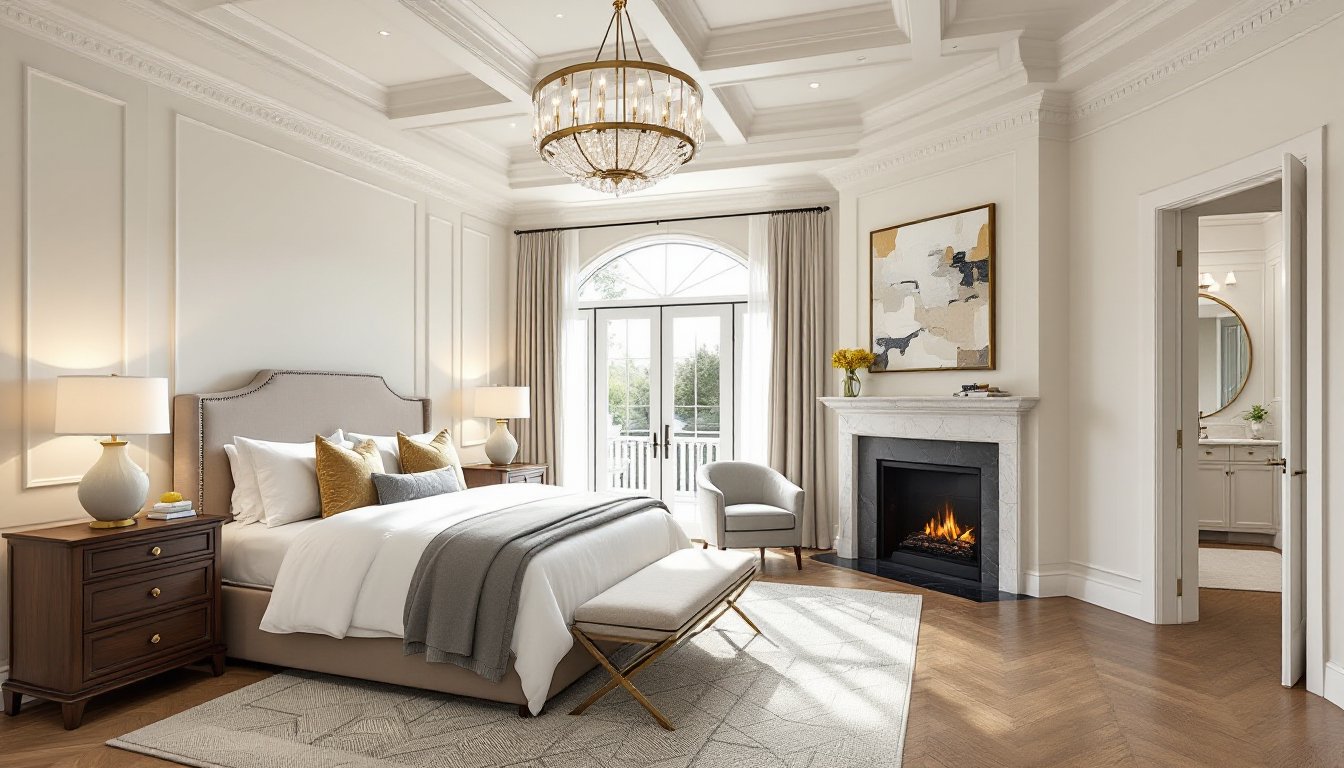
Architectural detailing gives a bedroom its structural luxury baseline. Crown molding should be substantial, 5 to 8 inches in a room with 10-foot ceilings, not the builder-grade 3-inch profile. Install it with a reveal or stacked profile for added depth.
Coffered ceilings add dimension but require adequate height. Plan for a minimum 10-foot starting ceiling: coffers typically drop 6 to 8 inches. Frame coffer grids with 1×6 or 1×8 pine, then apply trim and paint. This is a finish carpentry job, not a weekend DIY unless you’ve got solid miter saw skills and patience.
Wainscoting or wall paneling creates visual interest on large expanses of wall. Board-and-batten, raised panel, or picture frame molding all work depending on style preference. Standard wainscoting height runs 32 to 36 inches, but in a tall luxury bedroom, consider a taller profile at 48 inches or even full-height paneling with horizontal divisions.
Fireplaces add focal-point drama if the home’s framing and HVAC layout allow. Gas units simplify installation, they don’t require full masonry chimneys, just proper venting per manufacturer specs and local code. Position the fireplace opposite or perpendicular to the bed, not where it competes with window views.
Premium Materials and Finishes
Hardwood flooring is the luxury standard. Wide-plank engineered or solid oak, walnut, or maple in 5- to 7-inch widths (or wider) reads more upscale than narrow 2¼-inch strips. Hand-scraped or wire-brushed textures add character without looking distressed. Expect to pay $6 to $12 per square foot for quality engineered hardwood, plus installation.
If carpet is preferred for comfort underfoot, choose 100% wool or a high-density nylon with a quality pad (at least 8-pound density). Avoid builder-grade polyester that mats down in high-traffic zones. Luxury bedrooms often use area rugs over hardwood instead of wall-to-wall carpet, giving flexibility to refresh the look without full flooring replacement.
Wall finishes go beyond flat paint. Venetian plaster, grasscloth wallpaper, or textured limewash create depth and visual warmth. If painting, use low-VOC paint in eggshell or satin sheen. Flat paint shows every scuff in a lived-in space: satin reflects light subtly and wipes clean. Benjamin Moore Aura or Sherwin-Williams Emerald are solid choices for coverage and durability.
Window treatments should be layered: blackout roller shades or cellular shades for light control, plus drapery panels in natural linen, silk, or velvet for softness. Mount drapery hardware at ceiling height and extend rods 8 to 12 inches beyond the window frame on each side to maximize the sense of width and allow full window exposure when drapes are open.
Creating a Luxurious Sleep Sanctuary
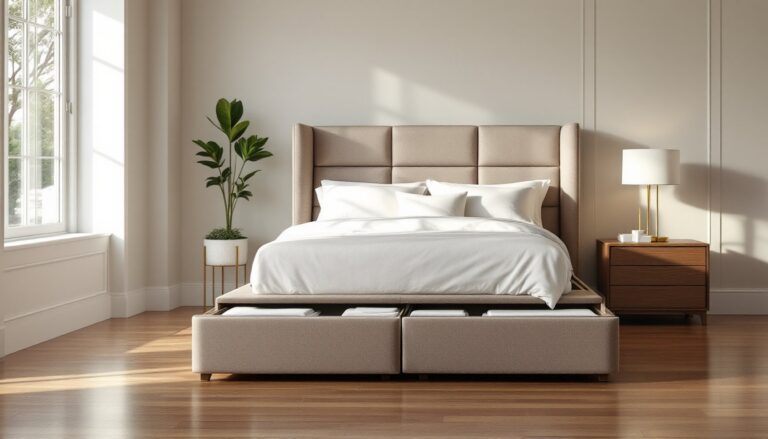
The bed itself anchors the room, and luxury home features often center around statement beds. Choose a frame with an upholstered headboard in linen, velvet, or leather, ideally tall enough to balance the room’s ceiling height. In a 10-foot ceiling room, a headboard reaching 60 to 72 inches works proportionally.
Mattress quality matters more than the frame. Invest in a high-coil-count innerspring (1,000+ coils for a queen) or a multi-layer latex or hybrid mattress. Skip the gimmicks: focus on support, edge stability, and breathability. Pair it with a solid foundation or platform base, not a flimsy box spring.
Bedding should include multiple layers: a quality fitted and flat sheet (300+ thread count cotton sateen or percale), a duvet with a removable cover, and a coverlet or quilt for texture. Add euro shams, standard shams, and decorative pillows, but keep it functional, no more than five or six pillows if people actually sleep here.
Bedside tables should be proportional to the bed height. Top surface should sit level with or slightly below the mattress top. Include built-in or table lamps with three-way switches for adjustable light levels. Install outlets with USB ports in or behind the nightstands to avoid cord clutter.
Climate control is non-negotiable. A ceiling fan with a remote provides circulation without noise. Choose a model with a 52- to 60-inch blade span for rooms up to 400 square feet: larger suites may need dual fans or a commercial-grade unit. Install on a slope ceiling adapter if the ceiling is vaulted. If adding HVAC zoning, a separate thermostat for the master suite allows precise temperature control independent of the rest of the house.
Designing Your Master Bedroom Layout for Maximum Luxury
Layout starts with the bed position. In most mansion suites, the bed is centered on a feature wall (often opposite the entry) with symmetrical nightstands and lamps flanking it. Leave at least 36 inches of clearance on each side for easy access and making the bed. If the room is large enough, float the bed away from the wall with a console or low bookshelf behind it, this works best in rooms over 500 square feet.
Create a seating area separate from the sleeping zone. A pair of upholstered chairs with a small table or a chaise lounge near a window makes the room functional beyond sleep. This isn’t just for aesthetics, it’s a practical space for reading, morning coffee, or putting on shoes without sitting on the bed.
Dressing areas or walk-in closets should have direct but discreet access. Pocket doors or wide cased openings (no door) work better than standard swing doors that eat up wall space. If the closet is large enough (8×10 or bigger), add a center island with drawers for accessories and a seating bench.
Consider a study nook or vanity area if square footage allows. A built-in desk with overhead cabinets and task lighting, or a standalone vanity with a mirror and stool, adds function without crowding the main room. Run dedicated electrical circuits if you’re adding multiple devices or heated styling tools.
Flow matters. Map out paths from the bed to the bathroom, closet, and exit. Avoid furniture blocking natural walkways or forcing awkward navigation around obstacles. In a luxury layout, you should be able to move through the space without squeezing past furniture or stepping over cords.
Lighting Strategies That Elevate Mansion Bedrooms
Lighting in a mansion bedroom operates on multiple layers: ambient, task, accent, and decorative. Ambient light comes from recessed cans, a chandelier, or a flush-mount fixture. For recessed lighting, space 6-inch LED cans about 4 to 6 feet apart on a dimmer circuit. Avoid placing cans directly over the bed, glare in your eyes at night is miserable.
A statement chandelier or pendant adds visual weight and style. Size it proportionally: for a room that’s 16×20 feet (320 square feet), a chandelier diameter of roughly 28 to 32 inches works. Hang it so the bottom is at least 7 feet above the floor, higher if the ceiling allows. Wire it to a dimmer switch.
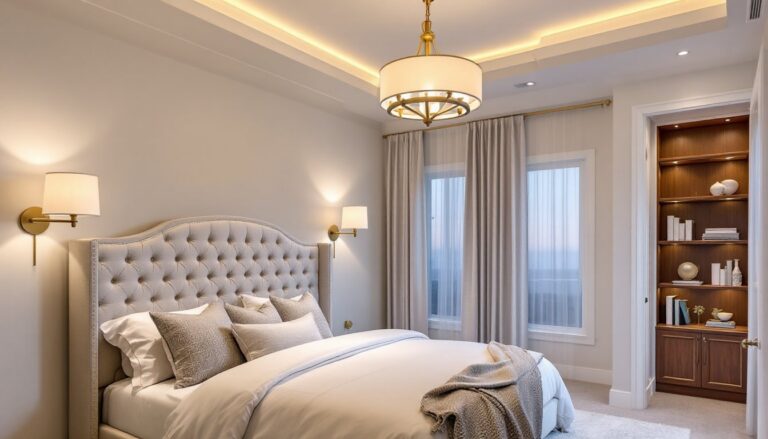
Task lighting includes bedside lamps, reading sconces, or adjustable swing-arm fixtures mounted to the wall. Choose bulbs in the 2700K to 3000K range for warm, restful light. If installing sconces, mount them 60 to 66 inches above the floor, centered over the nightstand or slightly higher if the headboard is tall.
Accent lighting highlights architectural features: LED strip lights in coffered ceiling recesses, picture lights over artwork, or uplights in corners that wash the ceiling. Use low-voltage LED tape (12V or 24V) for coffer lighting: it’s safer and easier to install than line-voltage products.
Dimmer switches are essential on every circuit. Install smart dimmers or a whole-room lighting control system (Lutron Caseta or similar) so all lights can be adjusted from a bedside remote or phone app. Avoid cheap rotary dimmers that hum or flicker, spend the extra $20 per switch for smooth, silent dimming.
Natural light control layers with motorized shades or drapery. If budget allows, motorized blackout shades programmed to lower at sunset and rise at dawn create a seamless experience. For a DIY approach, battery-powered motorized shade kits retrofit onto existing roller shades without hardwiring.